Quick Navigation
Let's talk about the spotted turtle. You've probably seen a picture – a small, dark turtle shell sprinkled with what looks like yellow polka dots. It's charming, almost like something from a children's book. But there's so much more to this little reptile than its good looks. I remember the first time I saw one in person at a reputable breeder's facility. It wasn't in a pet store, mind you. That should tell you something right off the bat. Its eyes were bright, and it moved with a purposeful curiosity that was completely captivating. That experience kicked off a long journey of learning, not just about keeping them, but about the precarious situation they face out in the wild.
This guide is the result of that obsession. We're going to dig into everything: what makes a spotted turtle tick, how to care for one if you're truly prepared for the commitment, and why their story in the wild is one we all need to pay attention to. It's a mix of practical pet advice and sobering conservation reality. Buckle up.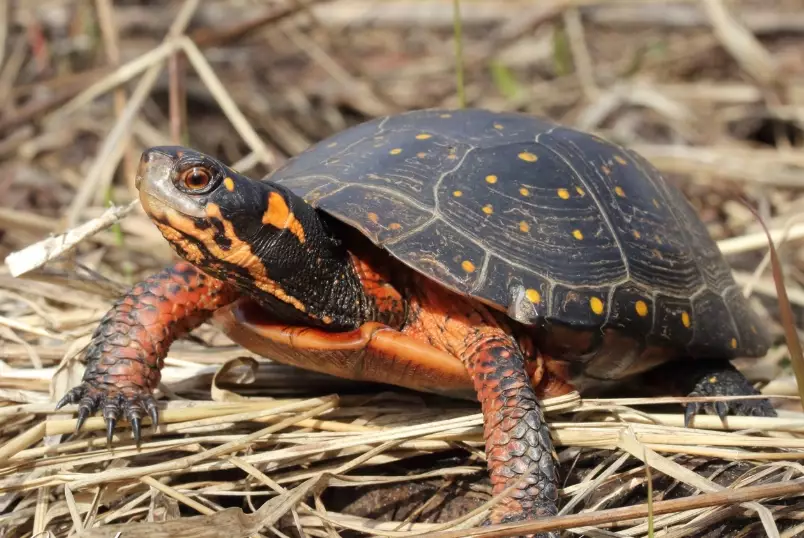
What Exactly Is a Spotted Turtle?
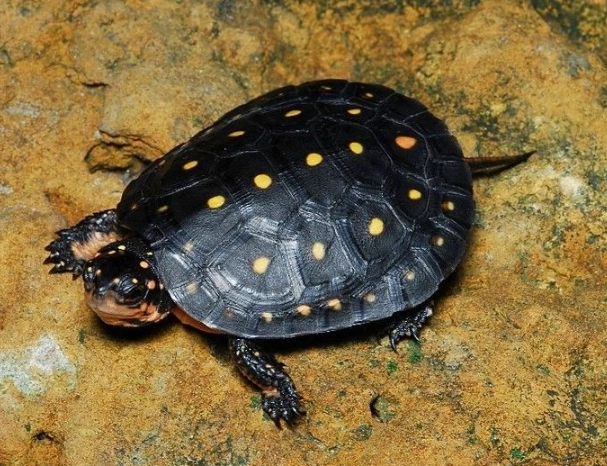
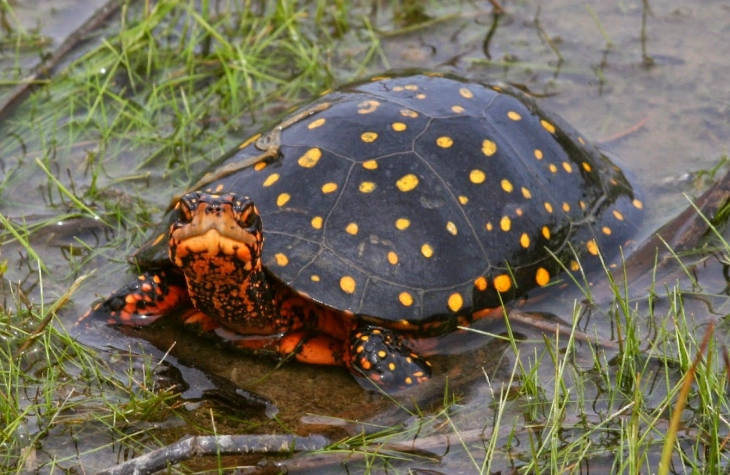
Scientifically known as Clemmys guttata, the spotted turtle holds the distinction of being the only species in its genus. That's kind of a big deal. It makes them unique in the turtle family tree. They're small, usually maxing out at about 4 to 5 inches (10-13 cm) in shell length. The shell, or carapace, is smooth and mostly black, and those iconic yellow spots? They're as unique as fingerprints. No two spotted turtles have the same pattern. Some have dozens of tiny specks, others have fewer, larger splotches. Interestingly, the spots aren't just on the shell. You'll find them on the head, neck, and legs too.
A living work of art, really.
Males and females look slightly different, a thing called sexual dimorphism. Males usually have a tan or brown chin, darker pigmentation on the hard part of their jaw (the beak), and a longer, thicker tail. Their plastron (the bottom shell) is also slightly concave. Females tend to have a yellow-orange chin, a flat or slightly convex plastron, and a shorter tail. It's not always easy to tell when they're young, but as adults, these clues help.
Where Do Spotted Turtles Live? (The Natural Habitat)
This is crucial to understanding their needs. In the wild, spotted turtles aren't found in big lakes or fast-moving rivers. They're creatures of shallow, quiet, often ephemeral waters. Think:
- Vernal Pools: These are temporary woodland ponds that fill with water in spring and may dry up in summer. They're fantastic for spotted turtles because they lack fish that would eat their eggs and hatchlings.
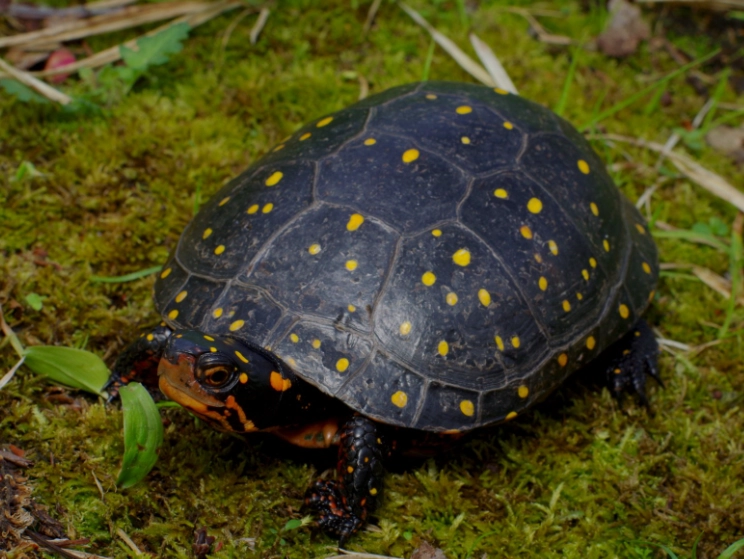
- Marshes & Bogs: Acidic, sphagnum-filled wetlands with plenty of soft, mucky bottoms and dense vegetation.
- Wet Meadows & Slow Streams: Anywhere with calm water, lots of plants, and easy access to basking sites and terrestrial cover.
The key theme is shallow. They're not deep divers. Their world is the sun-dappled, vegetated margins. They spend an incredible amount of time not in the water, but wandering on land through moist vegetation or buried in leaf litter. This semi-aquatic habit is non-negotiable. A setup that's just a tank of water is a complete failure for this species.
Geographically, their range is along the eastern United States and a tiny bit of southern Canada, from Maine in the north, down to Florida in the south, and west to parts of Illinois. But that map is shrinking fast, which we'll get to.
Wild vs. Captive Habitat Parameters
To recreate something they can thrive in, you need to understand the numbers behind their world. Here's a breakdown:
| Parameter | Wild Habitat Typical Range | Recommended Captive Range | Why It Matters |
|---|---|---|---|
| Water Temperature | 50°F - 75°F (10°C - 24°C) | 68°F - 75°F (20°C - 24°C) | They are cool-water turtles. Water that's too warm (common in tropical fish tanks) stresses their metabolism and immune system. |
| Basking Spot Temperature | N/A (Sun exposure) | 85°F - 90°F (29°C - 32°C) | Essential for digestion and shell health. Must have a significant temperature gradient from cool water to warm basking area. |
| Water Depth | 6 inches to 2 feet (15cm - 60cm) | 6-10 inches for adults, shallower for juveniles | They are poor swimmers in deep water. Must be able to easily touch the bottom and stretch their neck to breathe. |
| pH Level | Slightly Acidic to Neutral (6.0 - 7.5) | 6.5 - 7.5 | Mimics their preferred boggy, tannin-stained water. Extremely alkaline water can lead to shell and skin issues. |
The Spotted Turtle Care Guide: Getting It Right
Okay, so you're still interested in caring for one. I need to be blunt: spotted turtle care is intermediate to advanced. They are not a "beginner turtle" like a red-eared slider might be considered (though even those deserve expert care). Their specific needs and sensitivity make them a challenge. If you're not ready for a 30+ year commitment with precise environmental control, this isn't the turtle for you.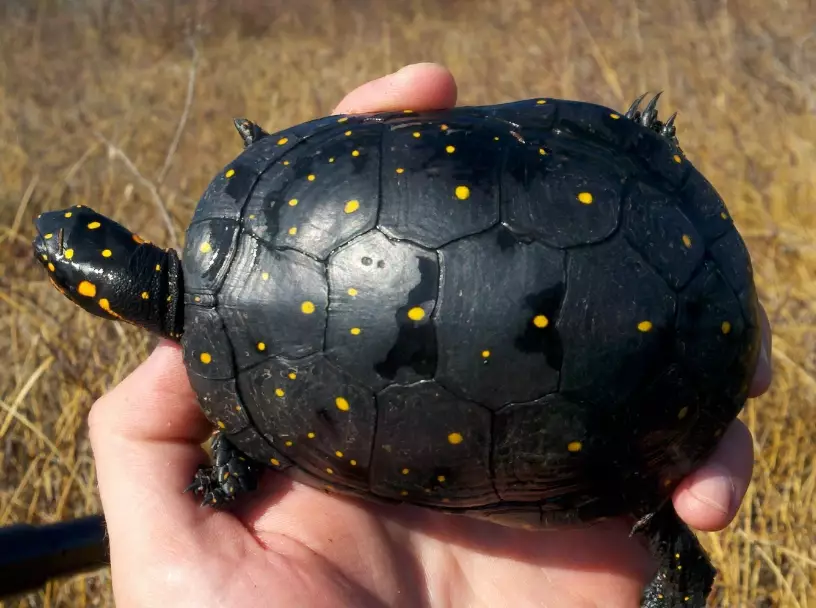
Seriously.
The Enclosure: More Than Just a Tank
Forget the standard aquarium. A single adult spotted turtle needs a minimum footprint of about 36" x 18" (a 40-gallon breeder tank is the absolute starting point), but bigger is always, always better. I'd argue for a 75-gallon or, ideally, a custom-built enclosure. The layout is what's critical:
- The Water Section: This should be 50-60% of the enclosure. Depth as per the table above. You must have a high-quality canister filter. Spotted turtles are messy eaters and pristine water is non-negotiable to prevent shell rot. I've had good results with filters rated for tanks twice the size of my water volume.
- The Land Section: This is the other 40-50%. It needs to be a true "paludarium" style area. Use a combination of cork bark, sphagnum moss, peat, and leaf litter (oak leaves are great). It must stay humid but not waterlogged. This is where they will sleep, explore, and sometimes even nest.
- Basking Area: This sits in the land section. A flat stone or piece of slate under a dedicated heat lamp. The key is that the turtle must be able to get its entire body completely dry and warm.
Spotted Turtle Diet: What's on the Menu?
In the wild, they are opportunistic omnivores with a strong preference for protein, especially when young. Their diet is wildly varied. We need to mimic that diversity in captivity to prevent nutritional deficiencies.
Protein Sources (about 60-70% of diet for adults, more for juveniles):
- Earthworms (an absolute favorite and a great staple)
- Slugs and snails (with shell for calcium)
- Live or frozen/thawed bloodworms, daphnia, brine shrimp
- High-quality, low-fat commercial turtle pellets (sparingly)
- Occasional pinky mice (for adults, as a rare treat)
Plant Matter (about 30-40% of diet for adults):
- Duckweed (they will graze on it constantly if you grow it in their water section)
- Dark leafy greens: dandelion greens, endive, escarole (avoid iceberg lettuce, it's useless)
- Aquatic plants like anacharis, water hyacinth (they'll eat and hide in it)
Supplements are key. A calcium powder (without vitamin D3 if using a proper UVB light, with D3 if not) should be dusted on food 2-3 times a week. A multivitamin once a week is also wise.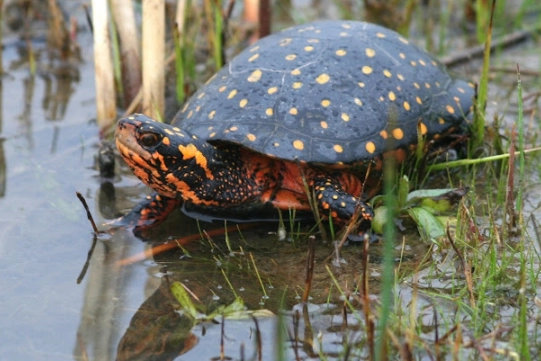
Health and Potential Problems
A well-cared-for spotted turtle can live over 50 years in captivity. The problems arise when their specific needs aren't met.
- Shell Rot (Ulcerative Shell Disease): This is enemy number one. It starts as soft, smelly, pitted spots on the shell. Caused by persistently dirty water, poor diet, or injuries. Prevention is 100% easier than cure: clean water, proper basking, and a good diet.
- Respiratory Infections: "Bubbles from the nose or mouth, lethargy, swimming lopsided. Often caused by water that's too cold or drastic temperature swings.
- Parasites: Especially in wild-caught individuals (which you should NEVER buy). A fecal exam by an exotic vet is a must for any new turtle.
- Obesity: Yes, turtles can get fat. Overfeeding, especially high-fat foods like fatty fish or too many pellets, leads to a layer of fat around the legs and neck and strains their organs.
Find a vet who specializes in reptiles before you have an emergency. Not all vets know turtle medicine.
The Hard Truth: Conservation Status and Ethics
This is the part that makes keeping spotted turtles so ethically complex. The International Union for Conservation of Nature (IUCN) lists them as Endangered globally. In many states within the US, their status is even more dire. For example, the U.S. Fish & Wildlife Service has listed the spotted turtle as "Threatened" under the Endangered Species Act in parts of its range, with strict regulations against collection.
Why are they disappearing?
- Habitat Loss & Fragmentation: This is the big one. Wetlands are drained for development, paved over, or polluted. A spotted turtle's home range is small, but if a road cuts through it, that population is often doomed.
- Illegal Collection for the Pet Trade: Despite laws, their beauty makes them a target. Taking a spotted turtle from the wild is not only illegal in most places, it's devastating to local populations that reproduce slowly.
- Road Mortality: As they move between wetlands, especially during nesting season, many are killed on roads.
- Climate Change: Alters the hydrology of their wetland homes and can skew sex ratios, as incubation temperature determines the sex of the hatchlings.
It's a bleak picture.
So what does this mean for you as a potential keeper? It means your turtle must come from captive-bred sources. Period. Ask for detailed lineage information from the breeder. Reputable breeders are proud of their work and will provide it. Supporting captive breeding creates a sustainable pet population and removes pressure from wild ones.
Spotted Turtle FAQs: Your Questions Answered
Breeding Spotted Turtles in Captivity
This is for experienced keepers only, but it's a vital practice for conservation-minded hobbyists. Successfully breeding them helps ensure no more need to be taken from the wild. Here's a very simplified overview:
You need a sexually mature pair (males mature around 3-5 years, females 7-10). They require a pronounced cooling period (brumation) to mimic seasonal cycles. In spring, courtship involves the male chasing and vibrating his claws in front of the female's face. If successful, the female will later seek out a perfect nesting spot in the deep, moist substrate of the land area. She may lay 3-5 small, elliptical eggs. These need to be carefully excavated and incubated in a separate, temperature-controlled incubator in slightly moist vermiculite. Incubation temperature determines sex (warmer = females, cooler = males) and can last 70-80 days.
Hatchlings are incredibly tiny, about the size of a quarter, and require even more meticulous care regarding water depth, water quality, and diet (heavily protein-based).
Final Thoughts and Your Role
Working with spotted turtles is a privilege. They are a window into a fragile ecosystem that's vanishing outside our windows. Whether you become a keeper or simply an admirer, you have a role to play.
If you keep them, do it right. Source ethically, build a phenomenal habitat, and commit for the long haul. Join organizations like the California Turtle & Tortoise Club or similar regional groups to connect with other serious hobbyists and breeders.
For everyone else, support wetland conservation. Donate to or volunteer with groups that protect and restore these critical habitats. Be mindful of roadways near wetlands in the spring and fall. The future of the wild spotted turtle depends on our collective awareness and action. Their story isn't just about a pretty pet; it's a benchmark for the health of our own environment.
I'll leave you with this. That first spotted turtle I saw years ago is still thriving in the care of a dedicated specialist. It's still spotting up, still exploring its world with that same quiet curiosity. That's the goal. Not just survival, but a life that allows for all their natural, fascinating behaviors. That's the standard we should all aim for.
Reader Comments