Quick Navigation
So you've stumbled across pictures of these stunning, almost ghostly white and black crested geckos, and you're hooked. I get it. The first time I saw a mature axanthic crested gecko in person, I was blown away. It looked like a living sketch, all intricate patterns in shades of charcoal, grey, and crisp white, completely devoid of the yellows and reds we're used to. But what exactly makes them this way? And more importantly, if you're thinking about getting one, what do you really need to know?
This isn't just another basic care sheet. We're going to dig into the nitty-gritty of the axanthic morph—the genetics that create that iconic look, the reality of their care (which, thankfully, isn't too different from a standard crested gecko), the hunt for a healthy one, and the honest truth about their price tags. Let's clear up the myths and get you the facts.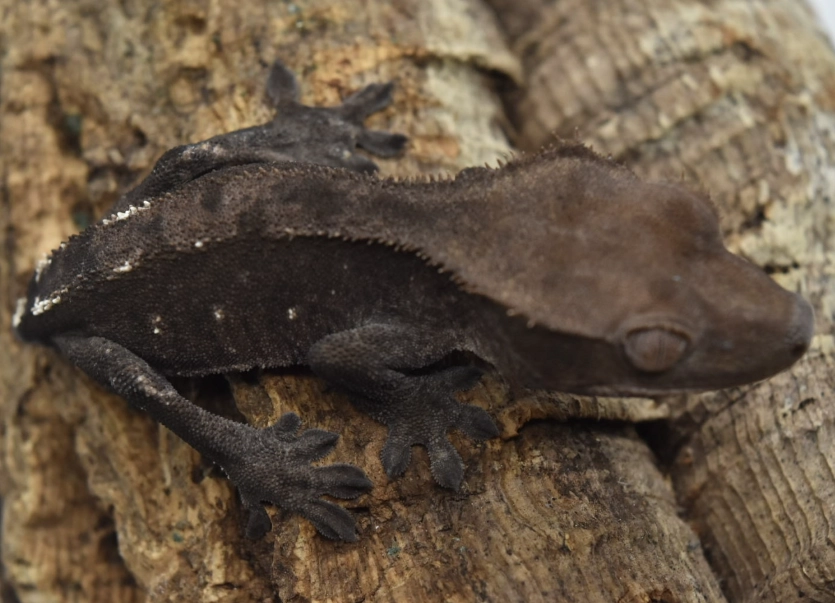
What Is an Axanthic Crested Gecko, Really?
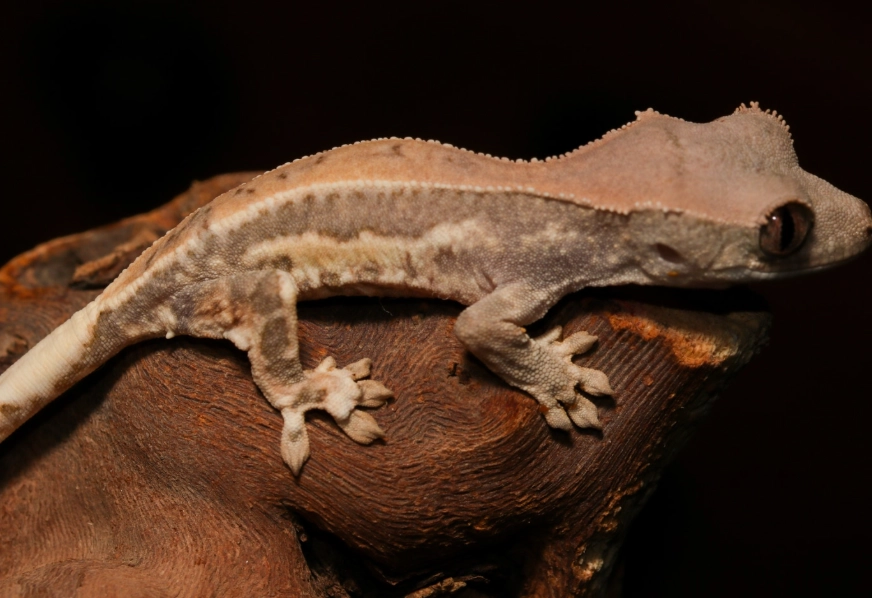
At its core, "axanthic" is a genetic trait. It's not a separate species or even a different breed. It's a crested gecko (Correlophus ciliatus) with a specific genetic mutation that inhibits the production of yellow and red pigments (xanthophores and erythrophores, if you want the science terms). What's left? The blacks, browns, greys, and whites created by other pigment cells called melanophores.
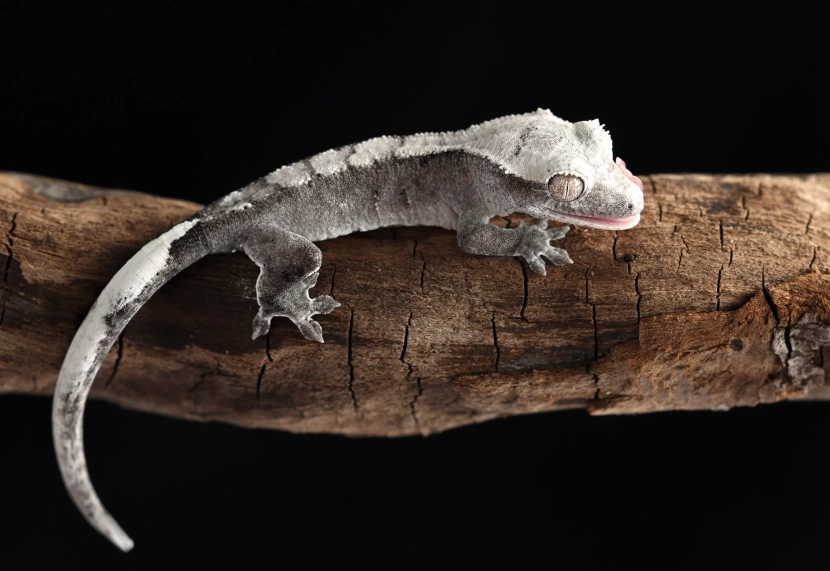
The result is an animal with a dramatically different color palette. Instead of fiery reds, sunny yellows, or warm browns, you get a cool-toned, high-contrast gecko. Patterns like tiger stripes, portholes, or harlequin markings become incredibly sharp and defined against the neutral background. It's a look that many reptile enthusiasts, myself included, find incredibly elegant and striking.
Quick Science Bit: The axanthic gene is recessive. This means a gecko needs to inherit the gene from both parents to visually show the trait. If it only gets one copy, it looks normal but carries the gene—we call these "het" or heterozygous. This genetic dance is crucial for understanding how they're bred and why they can be pricey.
The Axanthic Look: Beyond Just "Black and White"
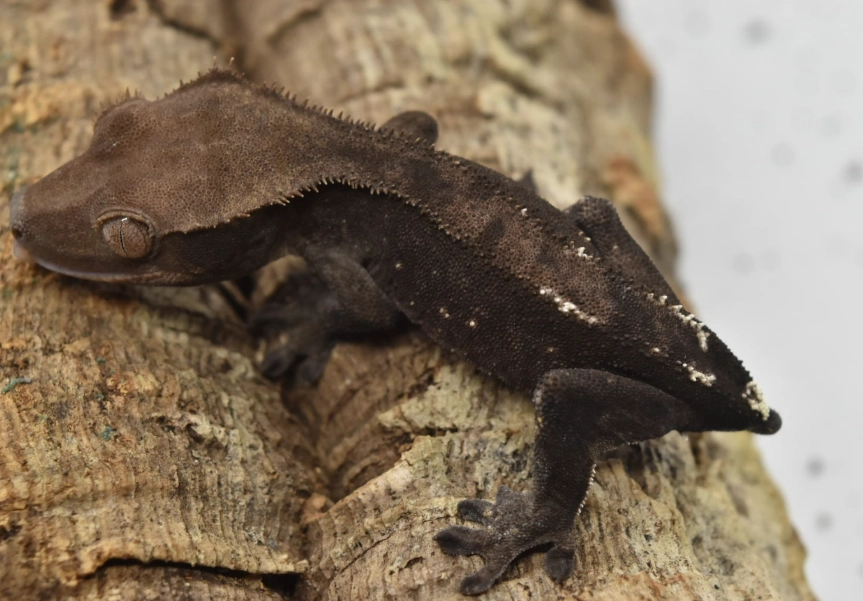
Calling them simply black and white is a bit of a disservice. The range is subtler and more beautiful. Hatchlings often start life looking quite dark, almost like a little grey ghost. As they mature, their true colors and patterns develop.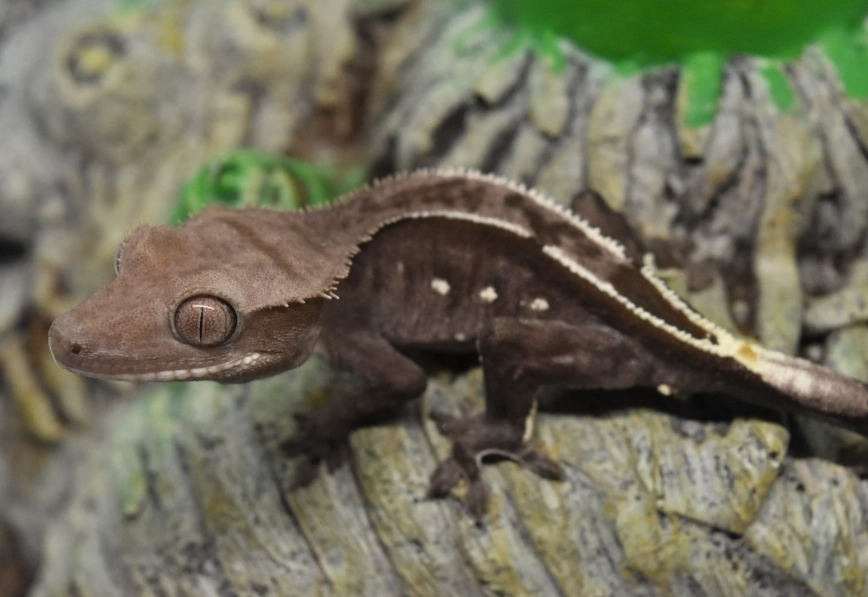
- Base Colors: You'll see shades ranging from deep charcoal and slate grey to lighter silver-grey and creamy off-white. Some even have a faint lavender or cool brown hue under certain lights.
- Patterns: The contrast makes patterns pop. A tiger-striped axanthic will have jet-black stripes on a pale grey field. A harlequin pattern becomes a stunning mosaic of dark and light patches.
- The "Fire" Effect: Here's a fun twist. Some high-contrast axanthics, when fired up (darkened), can appear almost jet-black with bright white markings. When fired down, they lighten to a pale grey canvas. This dynamism is part of the appeal.
The Genetics Behind the Magic (Simplified)
You don't need a biology degree, but understanding the basics helps you be a smarter buyer and appreciate your gecko more. As mentioned, it's a simple recessive trait. Let's break it down with a simple table, because seeing it helps.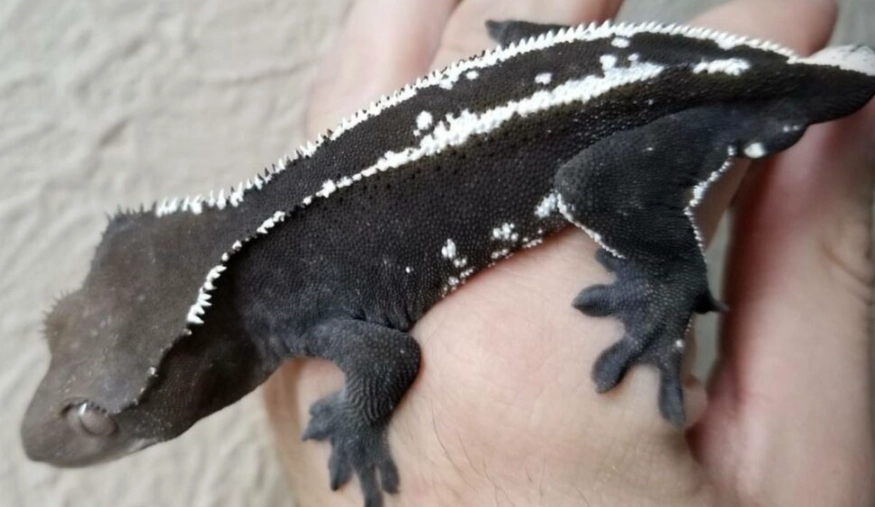
| Genetic Makeup | Abbreviation | Visual Appearance | What It Means for Breeding |
|---|---|---|---|
| Homozygous Axanthic | Ax/Ax | Visually Axanthic. Shows the black/white/grey colors. | Will always pass one axanthic gene to its offspring. |
| Heterozygous ("Het") for Axanthic | Ax/ax or +/Ax | Looks Normal. Appears as a regular colored crested gecko. | Carries the hidden gene. Bred to another het or visual axanthic, can produce visual axanthic babies. |
| Normal (No Axanthic Gene) | +/+ | Normal colored crested gecko. | Cannot produce axanthic offspring unless paired with a visual or het. |
So, when you see an axanthic crested gecko for sale, you're looking at an animal with that Ax/Ax genetic code. Breeders often pair visual axanthics together to guarantee all babies are visual. Or, they'll pair a visual with a "100% het" to get about half visual, half het babies. Buying a "possible het" (from a pairing where one parent was het) is a gamble—it might carry the gene, or it might not.
Watch Out: Some less scrupulous sellers might try to pass off a very low-color, greyish normal gecko as an axanthic. True axanthics lack yellow/red pigments even in their skin texture and around the eyes. A reputable breeder will provide photos of the parents or discuss the genetics openly.
Caring for Your Axanthic Crested Gecko: The Essentials
Here's the great news: caring for an axanthic crested gecko is identical to caring for any other crested gecko morph. The gene only affects color, not health, temperament, or basic needs. But let's do a full rundown because getting the basics right is everything.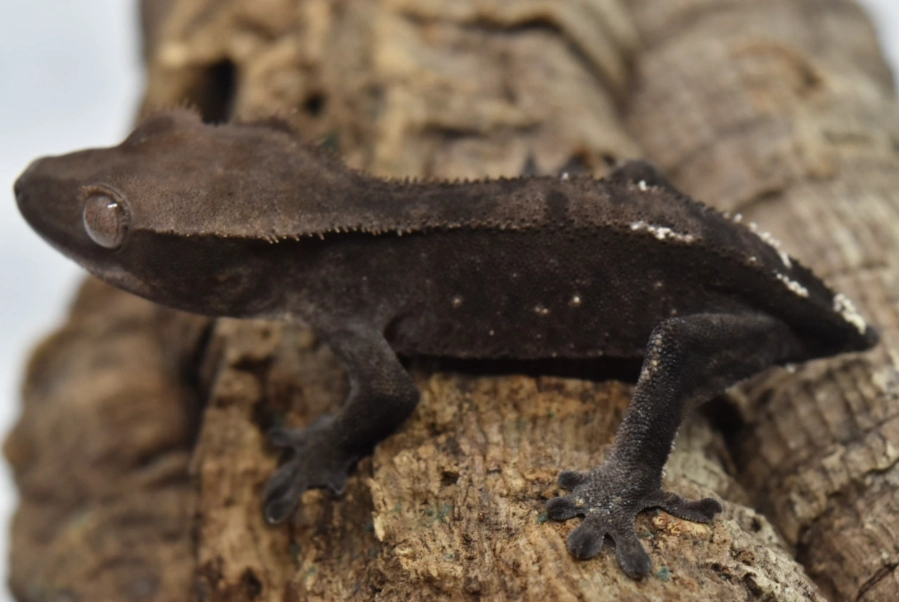
Housing and Environment
A tall terrarium is non-negotiable. These are arboreal animals. For one adult, a 18"x18"x24" tall enclosure is the absolute minimum, but I always recommend going bigger if you can—a 20-gallon tall or equivalent gives them more room to explore. Screen tops are great for ventilation, which is key to preventing respiratory issues in their humid environment.
- Substrate: I'm a fan of simple paper towel for beginners—it's safe and easy to monitor cleanliness. For a more natural look, reptile-safe soil mixes or coconut fiber work well, but ensure your gecko isn't accidentally ingesting it.
- Decoration: This is where you get creative. They need clutter! Vertical branches, cork bark tubes, vines, and live or artificial plants (like Pothos or Sansevieria) provide climbing paths and, most importantly, hiding spots. A stressed gecko is a hiding gecko, and that's okay.
Temperature, Humidity, and Lighting
Crested geckos are from New Caledonia, which has a fairly mild climate.
- Temperature: Keep it between 72-78°F (22-26°C) during the day. It can dip to about 68°F (20°C) at night. Heat above 82°F (28°C) can become dangerous, leading to stress and dehydration. I rarely use a heat source for mine unless the room gets very cold; if you do, use a low-wattage ceramic heat emitter or heat mat on a thermostat outside the tank.
- Humidity: This is crucial. Aim for a cycle: mist the enclosure heavily in the evening to spike humidity to 70-80%. Let it dry out to 50-60% by the next morning. This mimics dew and rain and gives them a drinking source. A digital hygrometer is a must-have tool.
- Lighting: They don't require special UVB lighting if fed a diet with proper D3 supplementation (more on that next). However, providing low-level UVB (like a ShadeDweller or 5% UVB tube) is increasingly considered beneficial for their overall health and well-being, and studies on reptile welfare support this. A simple LED plant light on a 12-hour cycle works fine for regulating day/night.
My Personal Routine: I mist my tanks right after dinner. That way, the humidity is perfect when they become active at night. I also keep a small, shallow water dish clean and full at all times, even though they often drink from droplets.
Diet and Feeding: The Fuel
This is arguably the easiest part. The staple diet for most keepers is a complete, powdered crested gecko diet (CGD) like those from Repashy or Pangea. You mix it with water to a ketchup-like consistency.
- Feeding: Offer fresh CGD every other evening for juveniles, and 2-3 times a week for adults. Remove uneaten food after 24-36 hours.
- Variety: Different flavors (Fig & Insect, Banana, etc.) can be rotated to ensure a balanced intake. Some keepers offer small, gut-loaded insects like crickets or dubia roaches once a week as a treat, especially for growing youngsters or breeding females. Dust insects with a calcium supplement.
- Supplementation: If you are not using UVB lighting, you must use a CGD that contains vitamin D3. If you are using UVB, you can use a formula without D3. Calcium is usually already in the mix.
Finding and Choosing a Healthy Axanthic Crested Gecko
This is where your due diligence pays off. Because of their value, you want to be extra careful.
Where to Look
Avoid big-box pet stores. Your best bets are:
- Specialized Reptile Expos: You can see the animal in person, talk directly to the breeder, and assess its health on the spot.
- Reputable Online Breeders: Many excellent breeders ship nationwide. Look for those with detailed websites, clear genetics information, and lots of photos/videos of the actual animal and its parents. Read reviews.
- Recommendations from Communities: Forums and Facebook groups dedicated to crested geckos or reptile morphs can point you toward trusted sources.
The Health Checklist
When you're evaluating an axanthic crested gecko, look for these signs of a healthy animal:
- Body Condition: Plump tail (their fat reserve), well-rounded body, not bony along the spine or hips.
- Eyes: Clear, bright, and alert. No crustiness or sunken appearance.
- Skin: Clean, no stuck shed (especially on toes!), no cuts, sores, or black spots that could indicate burns or fungal issues.
- Mouth: Clean, no dried food or mucus (sign of mouth rot).
- Activity: It should be fairly alert when handled gently. Lethargy can be a sign of illness, but remember, they are nocturnal and may be sleepy during the day.
- Vent: Clean and clear.
The Price Reality: Why Are They So Expensive?
Let's be blunt. A standard crested gecko might cost you $50-$100. A visual axanthic crested gecko can easily range from $300 to over $1000. Why?
- Recessive Genetics: Producing visual animals requires careful pairing over generations. You can't just get them from any random pair.
- Limited Gene Pool (Initially): When the morph was first established, there were few founding animals. While more common now, quality lines are still selectively bred.
- High Demand: Their unique look drives desire, which keeps prices elevated compared to common morphs.
- Lineage & Pattern: An axanthic with a exceptional pattern (like extreme harlequin or dalmatian spots) will command a much higher price than a basic one.
Honestly, that price tag can be a barrier for many newcomers, and I totally understand. Sometimes, the hunt and the wait for the right one at the right price are part of the journey.
Common Questions Answered (The FAQ)
No, there's no evidence the axanthic gene is linked to any specific health defects. Their health is dependent on the same factors as any crested gecko: proper care, nutrition, and genetics from responsible breeding. A well-cared-for axanthic can live just as long—15 to 20 years.
All crested geckos can change color intensity (firing up/down). An axanthic crested gecko will generally stay within its grey/black/white spectrum. However, the contrast and specific shades can become more pronounced and beautiful as they mature from a juvenile into an adult. They don't "develop" yellow later if they are a true axanthic.
Not at all. The care is identical. The challenge isn't in the care; it's in the initial sourcing and cost. Please don't think paying more means you need to do anything special—just provide excellent standard care.
Great question. "Moonglow" typically refers to a line of very pale, patternless crested geckos that often (but not always) involve the axanthic gene combined with other pattern-reducing genes. An axanthic can have bold patterns. A moonglow is usually axanthic + patternless, resulting in a nearly all-white or pale grey gecko. Other white morphs like "lilly white" are caused by completely different genetic mechanisms.
For scientifically verified information on the species itself, resources like the The Reptile Database, maintained by taxonomic experts, is an excellent place to start for species classification and references. For in-depth, science-based care principles that apply to all reptiles, including lighting, the Reptifiles care guides are a fantastic resource built on current herpetocultural best practices.
Final Thoughts
The axanthic crested gecko is a testament to the fascinating world of reptile genetics. It offers a dramatically different aesthetic while being the same wonderful, quirky pet we know and love. Their care is straightforward, but the commitment is long-term, and the initial investment is significant.
My advice? Nail down your basic crested gecko care skills first. Get your enclosure set up and dialed in. Then, if the allure of that monochromatic beauty is still calling you, start your search patiently. Connect with good breeders, ask questions, and wait for the right animal. When you finally bring that living piece of art home, you'll know it was worth the effort.
I still remember the name of the breeder I got my first axanthic from, years later. That connection and the story are part of what makes keeping these animals so rewarding. It's not just a purchase; it's the start of a long, interesting chapter. Good luck!
Reader Comments