Quick Guide
Let's be honest, the first time you see an orange axolotl, it's hard not to stare. That vibrant, almost unreal golden-orange color, those feathery external gills waving gently, that permanent smile... it looks like something from a fantasy movie. I remember walking into a local aquarium store years ago and seeing one for the first time. I thought it was a toy. When it moved, I was hooked. But here's the thing nobody tells you upfront: that stunning orange axolotl is a living creature with very specific needs, not just a cool decoration.
I've made my share of mistakes over the years—who hasn't?—and learned that keeping these "Mexican walking fish" (they're actually amphibians, not fish) happy and healthy requires a bit more know-how than your average goldfish. This guide is everything I wish I'd known before I brought my first golden-hued friend home. We're going to dive deep, past the Instagram photos, into what it really takes to care for an orange axolotl.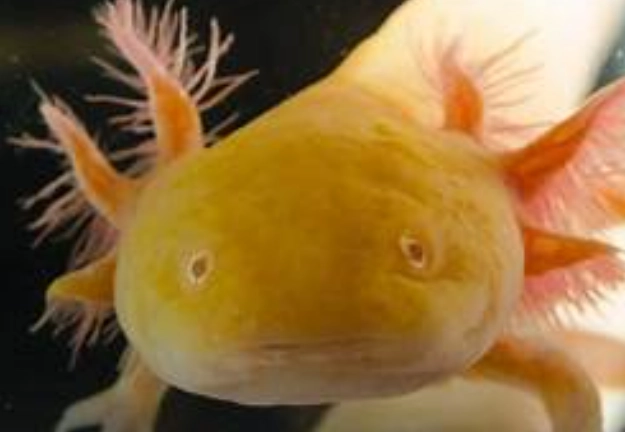
What Exactly Is an Orange Axolotl?
An orange axolotl is a color morph—a genetic variant—of the aquatic salamander species Ambystoma mexicanum. In the wild, axolotls are typically a mottled brown, grey, or black, which helps them hide in the muddy lake beds of their only natural home: the ancient lake system of Xochimilco near Mexico City. The bright orange or golden color we see in pets is almost exclusively a product of the pet trade and laboratory breeding.
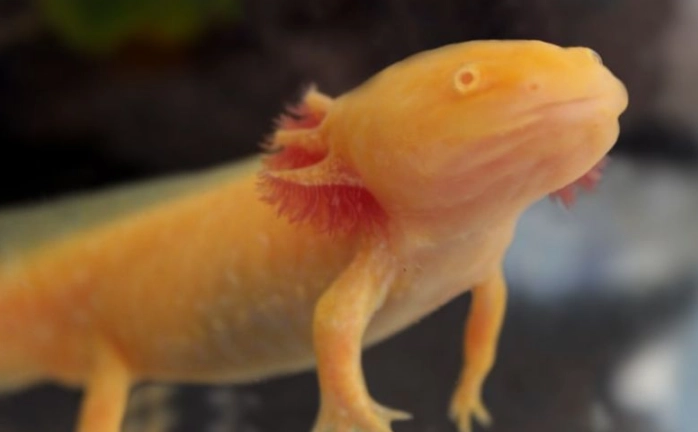
The most common type of orange axolotl is the "golden albino." This is a bit of a confusing name because they aren't truly orange like a pumpkin; it's more of a brilliant yellow-gold, sometimes with a peachy or light orange undertone. Their eyes are clear with a golden or silvery sheen, and they lack the dark skin pigments (melanophores) of their wild cousins. Then you have the "leucistic" morph, which is white with pinkish gills and dark eyes. Sometimes, through specific breeding, you can get axolotls that express more of a true, vibrant orange hue, often by mixing genes from other color lines. It's complex!
So, if you're dreaming of finding a neon orange axolotl swimming in a lake in Mexico, it's not going to happen. That vivid color is a hallmark of captive life. It makes you wonder, doesn't it? How did a creature that evolved to be camouflaged end up becoming popular in pet stores precisely for being the opposite?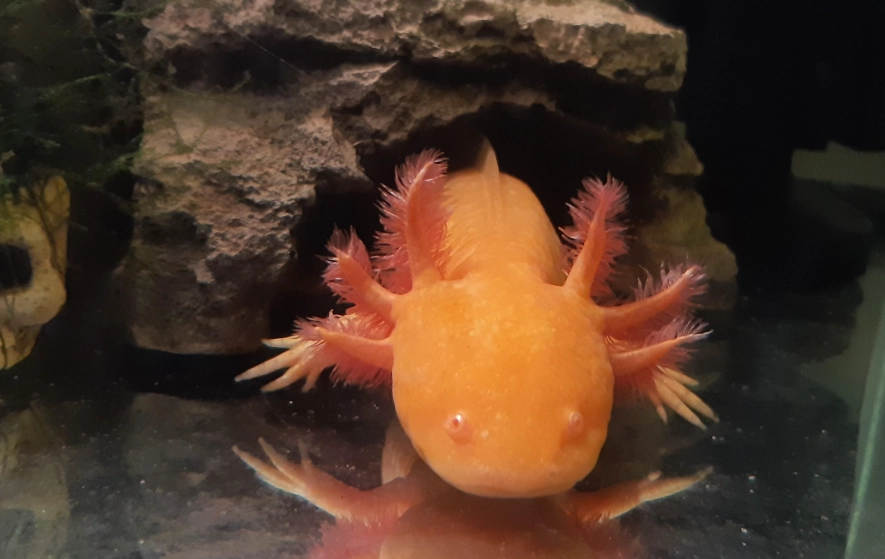
The Genetics Behind the Gold: Why Are They Orange?
This is where it gets interesting for the science nerds among us (like me). The orange or golden color isn't just one switch being flipped. It's usually a combination of recessive genes. For a golden albino axolotl to be born, it needs to inherit two copies of the "albino" gene (which removes black and brown pigment) from both parents, AND often specific genes that allow yellow and red pigments (xanthophores and erythrophores) to be expressed strongly.
Think of it like a paint set. Wild-type axolotls have all the colors: black, brown, yellow, red, and shiny iridophores. The albino gene takes away the black and brown paint pots. In some albinos, the remaining yellow and red paints are also very faint, resulting in a mostly white animal with pinkish tones (a white albino). But in the golden albino, the genes say, "Go wild with the yellow and red!" resulting in that signature sunny color. Breeders have selectively paired axolotls that show the brightest colors for generations to stabilize and intensify this trait.
It's a delicate art. I've spoken to breeders who spend years trying to perfect a specific shade. Sometimes a breeding pair of two beautiful orange axolotls will produce a clutch of eggs where only half the babies are orange, and the others are white or even wild-type. Genetics is a game of chance.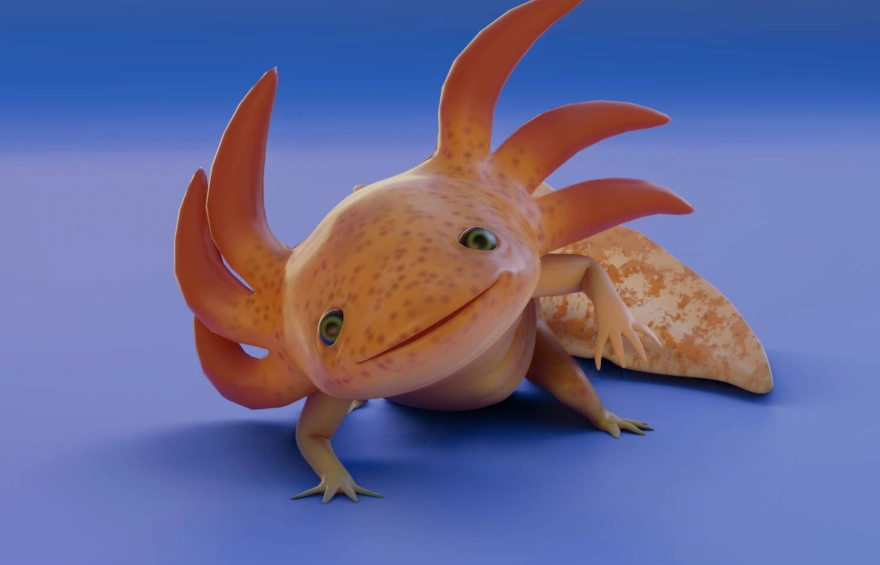
The Complete Orange Axolotl Care Guide
Okay, let's get practical. You've fallen for an orange axolotl, and you want to give it the best life possible. This isn't a "set it and forget it" pet. Their care is intermediate level. It's not rocket science, but it does require consistency and attention to detail. Get these fundamentals wrong, and you'll have a stressed, sick, or worse, axolotl on your hands. Get them right, and you'll have a fascinating, long-lived companion.
Tank Setup: Building a Cool, Clean Castle
Size matters. A common mistake is putting a single adult axolotl in a 10-gallon tank. That's cramped. The absolute minimum for one adult is a 20-gallon long tank. Why "long"? Because axolotls are bottom-dwellers. They need floor space, not height. I recommend 30 gallons or more for one—it gives more stability in water quality and room for them to wander. For two axolotls, you're looking at 40 gallons minimum. They produce a lot of waste.
The substrate is a big debate. Bare glass is easy to clean but provides no grip and can stress them out. Gravel is an absolute NO—they will ingest it and become impacted, which is often fatal. The best options are either very fine sand (like pool filter sand) that can pass through them if accidentally eaten, or large, smooth river rocks that are bigger than their head. I personally use a bare-bottom tank for my sick or juvenile axolotls and a fine sand tank for my adults. They seem to enjoy sifting through the sand.
Filtration is non-negotiable, but it must be gentle. Axolotls hate strong currents. They are lake creatures, not river rapids survivors. A canister filter with a spray bar pointed at the wall, or a simple sponge filter, is perfect. Sponge filters are cheap, provide gentle filtration, and are safe for their delicate gills. You'll need to cycle this tank completely before adding your axolotl—that means establishing beneficial bacteria to process ammonia. This can take 4-8 weeks. Don't rush it.
Water Parameters: The Goldilocks Zone
Axolotls are cold-water animals. This is the most critical parameter people mess up. Their ideal temperature range is 60-64°F (16-18°C). They can tolerate 58-68°F (14-20°C) for short periods, but anything above 70°F (21°C) causes severe stress, leading to disease, loss of appetite, and fungal infections.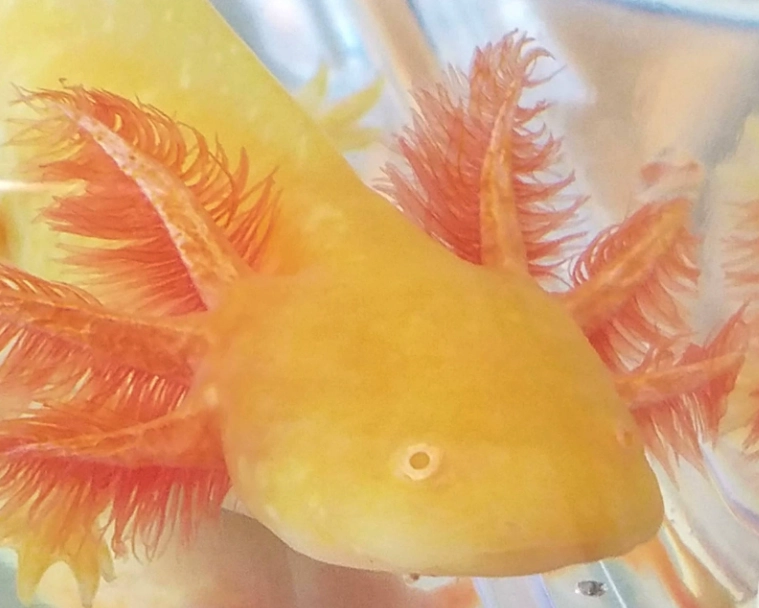
So, how do you keep water cool? If your home is consistently warm, you will likely need an aquarium chiller. They are expensive but essential. Alternatively, you can use fans blowing across the water surface, keep the tank in a cool basement, or use frozen water bottles (though this is labor-intensive and causes temperature swings). I live in a temperate climate and use a combination of a basement location and a fan in the summer. It's a constant battle during heatwaves.
Other water parameters are important too. They need neutral to slightly hard water. Use a water conditioner to remove chlorine and chloramines every time you add tap water.
| Parameter | Ideal Range | Why It Matters |
|---|---|---|
| Temperature | 60-64°F (16-18°C) | Metabolism, immune function, gill health. Too warm = stress & fungus. |
| pH | 6.5 - 8.0 | Stability is key. Sudden swings are harmful. |
| Ammonia (NH3) | 0 ppm | Toxic, causes chemical burns. |
| Nitrite (NO2) | 0 ppm | Toxic, prevents blood from carrying oxygen. |
| Nitrate (NO3) | Less toxic, but high levels cause long-term stress. | |
| GH (General Hardness) | 6-16 dGH | Provides essential minerals. |
| KH (Carbonate Hardness) | 3-8 dKH | Helps stabilize pH. |
Feeding Your Orange Axolotl: The Menu
They are carnivores. Pure and simple. In the wild, they eat worms, insects, small fish, and crustaceans. In captivity, we need to replicate that nutritionally. The staple diet for an adult should be earthworms (nightcrawlers). They are nutritionally complete and get them wiggling like they would in nature. You can buy them from bait shops or breed your own.
For variety and for younger axolotls, you can offer:
- Salmon Pellets: High-quality, soft-sinking pellets made for carnivorous fish or axolotls specifically.
- Bloodworms (frozen or live): A good treat or food for juveniles, but not a complete diet for adults.
- Blackworms: Excellent for stimulating picky eaters.
- Occasional treats: Pieces of thawed shrimp or fish (ensure no spices or salt).
How much? An adult axolotl typically eats one large nightcrawler or equivalent every other day. Juveniles need daily feeding. A good rule of thumb: feed them as much as they can eat in 5-10 minutes, and then remove any uneaten food to avoid fouling the water. Their stomach is about the size of their head.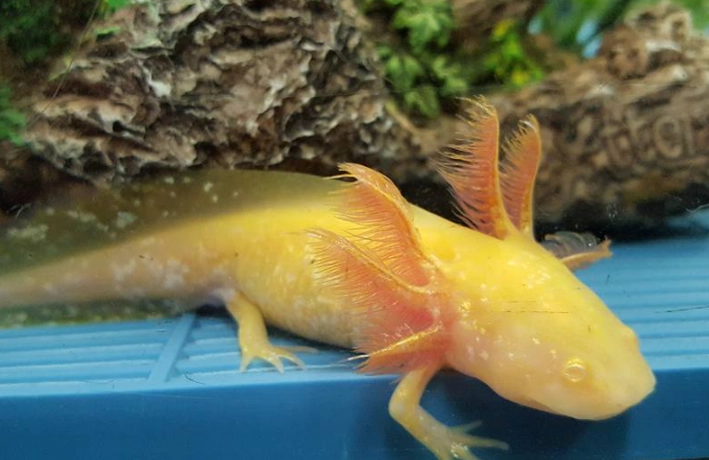
Common Health Issues & Lifespan
With proper care, an orange axolotl can live 10-15 years. Some even reach 20! That's a significant commitment. Their most common health problems are almost always related to their environment.
Fungal Infections: Appear as white, cotton-like fluff on the gills or body. Often caused by stress from poor water quality or temperatures that are too high. Salt baths or tea baths are common treatments, but improving the underlying cause (water quality/temp) is crucial.
Gill Shrinkage: Their feathery gills are a health indicator. If they shrink and become stubby, it usually means poor water quality (high nitrates) or insufficient oxygen. Fix the water, and they often regrow.
Impaction: From eating gravel or large pieces of substrate. Symptoms include floating, refusing food, and a swollen cloaca. This is a veterinary emergency. Prevention is simple: use sand or large rocks.
Ammonia/Nitrite Poisoning: Red, inflamed gills, frantic swimming, curling gills forward. Requires immediate large water change with conditioned water and addressing the tank's cycle.
It's wise to locate an exotic veterinarian who has experience with amphibians before you even have a problem. Not all vets do. The Association of Reptilian and Amphibian Veterinarians (ARAV) has a directory that can be a good starting point.
Finding and Choosing a Healthy Orange Axolotl
So, you're ready. Where do you get one? You have a few options, each with pros and cons.
Reputable Breeders: This is often the best choice. Breeders who specialize in axolotls usually care deeply about genetics and health. They can answer detailed questions about the parents, lineage, and how they've been raised. You can often find them at reptile expos, through online axolotl communities, or on dedicated breeder websites. Expect to pay more—anywhere from $40 to well over $100 for a rare, high-color orange axolotl.
Local Fish/Pet Stores: A mixed bag. Some stores have knowledgeable staff and healthy stock. Many do not. Always inspect the tank conditions. Are the axolotls kept cool? Is the tank clean? Are they on gravel? Ask where they source them from. Be prepared to be a rescuer if you buy from a subpar store.
Online Sellers: Many breeders ship. This is common and generally safe when done by experienced shippers using overnight services with heat or cold packs as needed. Ensure they have good reviews and a live arrival guarantee.
How to pick a healthy one, whether it's an orange axolotl or any other color?
- Active and Alert: It should react to movement outside the tank.
- Full, Fluffy Gills: The gills should be bushy and forward-facing, not shriveled or curled back.
- Clear Skin & Body: No white fungus, red sores, or unusual lumps. The body should be plump but not bloated.
- Straight Tail: The tail should not be curved or kinked, which can indicate metabolic bone disease.
- Good Appetite: If possible, ask to see it eat.
Frequently Asked Questions (FAQs)
Final Thoughts: Is an Orange Axolotl Right for You?
Look, I love my orange axolotl. Watching him glide around his tank is meditative. But he's not a low-maintenance pet. He requires a chiller for half the year, weekly water testing, a specific diet of live worms, and a watchful eye for any sign of trouble. It's a hobby in itself.
If you're someone who enjoys the "aquarium keeping" side of things—the water chemistry, the setup, the routine—then an axolotl is an incredibly rewarding pet. If you want a pet you can cuddle or one that requires minimal daily interaction, this isn't it.
That vibrant orange axolotl is a living marvel of nature and genetics. Bringing one into your home is a privilege that comes with responsibility. Do your homework, set up the tank properly before you buy, and you'll be set for years of enjoyment with one of the most unique creatures you can keep in a tank.
Just remember, behind that permanent smile is an animal that depends entirely on you to get its world just right.
Reader Comments