Key Takeaways
- What Exactly is an Adult Leopard Gecko?
- The Non-Negotiables: The Perfect Home for Your Gecko
- Feeding Your Adult Leopard Gecko: It's More Than Just Crickets
- Health Check: Reading Your Gecko's Signals
- Handling and Behavior: Building Trust
- Answering Your Big Questions (FAQ)
- The Senior Gecko: Special Considerations
So you've got an adult leopard gecko, or maybe you're thinking about getting one. Good choice. They're often called the perfect beginner reptile, and for good reason. But here's the thing I've learned after years of keeping them – "beginner" doesn't mean "no maintenance." An adult leopard gecko has needs that are different from a tiny baby, and getting it right is the difference between a pet that just survives and one that truly thrives for 15, even 20 years.
I remember my first adult gecko, Morty. I got him from a friend who was moving, and I thought I knew everything. I had a small tank, a heat pad, and some mealworms. He was fine for a while, but then he got lethargic. Turns out my setup was all wrong for a full-grown lizard. That was a wake-up call. Caring for an adult leopard gecko properly requires a shift in thinking.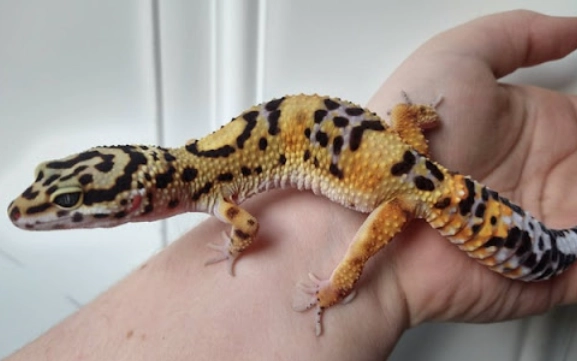
This isn't just a list of facts. It's a deep dive into the why behind every care step, mixing hard science with the kind of practical, hands-on tips you only get from someone who's made the mistakes so you don't have to.
What Exactly is an Adult Leopard Gecko?
Let's clear this up first. An adult leopard gecko isn't just an old juvenile. Biologically, they're considered adult once they reach sexual maturity, which is usually between 8 to 12 months old. But a one-year-old and a ten-year-old are both adults, right? Their needs can be subtly different. A young adult (1-3 years) is in its prime, active and hungry. A senior adult leopard gecko (8+ years) might be slower, eat less, and need a gentler touch.
You can usually tell an adult by its size – they typically reach 8 to 11 inches from nose to tail tip. Juveniles have more vibrant, high-contrast banding, while adults develop their famous spotted pattern (hence "leopard"). Their bodies are stockier, tails are nice and fat (a key health sign!), and they just have a more substantial presence in the tank.
The Non-Negotiables: The Perfect Home for Your Gecko
This is where most people, including past me, go wrong. A 10-gallon tank might have been okay for a baby, but an adult leopard gecko needs space to explore, hunt, and thermoregulate. The absolute minimum for one adult is a 20-gallon long tank. But honestly? Go bigger if you can. A 30 or 40-gallon breeder tank is fantastic. More floor space is always better than height for these terrestrial lizards.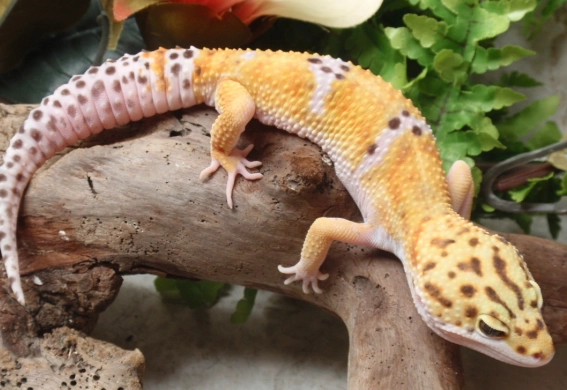
The Heat and Light Situation (It's Not What You Think)
Leopard geckos are crepuscular – active at dawn and dusk. They don't bask under a scorching sun like a bearded dragon. But they absolutely need heat to digest their food. The biggest myth? That they don't need any light at all. While they don't need UVB to survive (they get D3 from their diet), more and more evidence suggests low-level UVB can benefit their long-term health, improving calcium metabolism and activity levels. The American Veterinary Medical Association (AVMA) emphasizes the role of proper environmental lighting in reptile welfare.
Your heat setup should create a temperature gradient.
| Zone | Temperature Range | Purpose |
|---|---|---|
| Warm Hide Area | 88-92°F (31-33°C) | Digestion, comfort |
| Cool Hide Area | 70-77°F (21-25°C) | Resting, cooling down |
| Mid-Tank Ambient | 80-85°F (27-29°C) | General activity |
An under-tank heating pad (UTH) on one side, connected to a reliable thermostat, is the gold standard for belly heat. A low-wattage ceramic heat emitter or deep heat projector can help with ambient temps if your room is cold. Always use a thermostat! Unregulated heat mats can and will cause burns.
Watch Out: Avoid heat rocks. They are notoriously unreliable and cause severe thermal burns. This is one piece of pet store gear I tell everyone to steer clear of.
Substrate: The Flooring Debate
What you put on the bottom of the tank is a hot topic. For adult leopard geckos, safety is paramount. Impaction (intestinal blockage) is a real risk with loose substrates if ingested.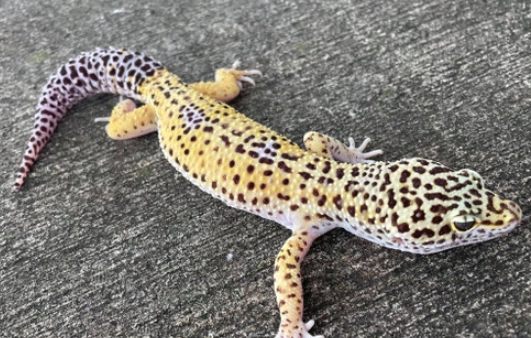
- Safest (Beginner-Friendly): Paper towel, slate tile, or non-adhesive shelf liner. Easy to clean, zero risk. It's boring, but it works.
- Advanced/Natural Option: A properly prepared mix of 70% topsoil (organic, fertilizer-free) and 30% playsand. This allows for natural digging behaviors. However, this requires meticulous maintenance to prevent bacterial growth and should only be used if you're confident in your husbandry and your gecko is healthy. The Reptifiles care guides have excellent, science-backed details on safe substrate mixes.
- Never Use: Calcium sand, pure sand, crushed walnut shell, cedar, or pine shavings. These are dangerous.
My personal rule? If you're new to adult leopard gecko care, stick with tile or paper towel. It's not worth the anxiety.
Feeding Your Adult Leopard Gecko: It's More Than Just Crickets
An adult's metabolism is slower than a baby's. While a juvenile might eat daily, an adult leopard gecko typically eats every other day, or even just 2-3 times a week. The key is variety and nutrition.
Gut-load your feeder insects 24-48 hours before feeding with nutritious veggies (carrots, sweet potato, leafy greens) and a commercial gut-load diet. This makes the bugs more nutritious for your gecko.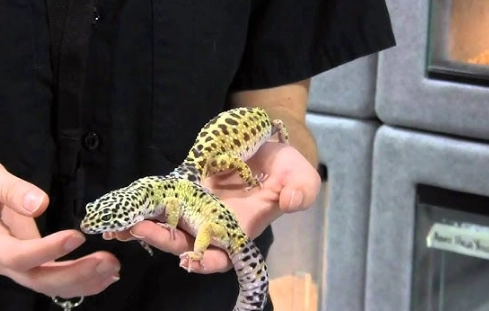
Here’s a quick list of great staple and occasional feeders:
| Feeder Insect | Nutritional Benefit | Feeding Frequency | Notes |
|---|---|---|---|
| Dubia Roaches | High protein, low fat, good calcium | Staple (2-3x/week) | My top pick. Easy to breed, don't smell, can't climb glass. |
| Crickets | Good protein, stimulates hunting | Staple (1-2x/week) | Can be noisy, smell, and bite your gecko if left uneaten. |
| Mealworms | High fat, chitinous shell | Occasional Treat | Fatty and can cause impaction if overfed. Use as a supplement. |
| Black Soldier Fly Larvae (Nutrigrubs) | Excellent calcium-to-phosphorus ratio | Staple or Supplement | Almost no dusting needed! A fantastic modern feeder. |
| Waxworms / Butterworms | Very high fat | Rare Treat (once a month) | Like reptile candy. Highly addictive, can cause refusal of other food. |
Supplements: The Secret to a Strong Skeleton
This is non-negotiable. Every single feeding for an adult leopard gecko needs to be dusted with supplements. You need two things:
- Calcium with Vitamin D3: Use this for most feedings (e.g., 2 out of 3 meals a week).
- Multivitamin: Use this once a week. Look for one containing Vitamin A (as retinol, not just beta-carotene).
Some keepers also offer a plain calcium powder (without D3) in a small dish in the enclosure, letting the gecko self-regulate. I've found this really helps, especially with gravid (egg-carrying) females.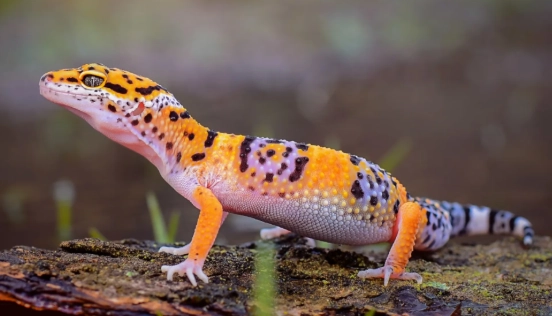
Pro Tip: Don't just dump powder on wet insects; it forms clumps. Put the bugs in a bag or container with a pinch of supplement and shake gently for a light, even coat.
Health Check: Reading Your Gecko's Signals
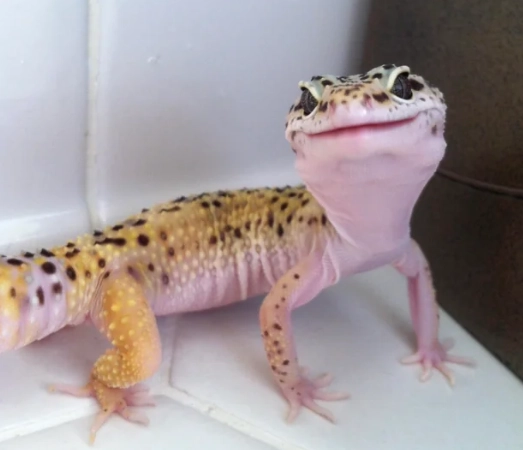
An adult leopard gecko is generally hardy, but you need to know what to look for. A healthy gecko has clear, bright eyes, a plump (but not obese) body, and a thick, fat-storing tail. The tail should be at least as wide as the space between its shoulders.
Common health issues in adults:
- Metabolic Bone Disease (MBD): Limp jaw, bowed legs, tremors. Caused by poor calcium/D3. This is a husbandry failure and is completely preventable with proper diet and supplements.
- Impaction: Lethargy, loss of appetite, a swollen abdomen. Can be caused by eating loose substrate or oversized feeders. A warm soak and gentle belly massage can help mild cases; severe cases need a vet.
- Stuck Shed: Old skin, especially on toes and the tip of the tail, not coming off. This can constrict blood flow and cause toe loss. Provide a humid hide (a hide box with damp moss or paper towel) at all times to help with shedding.
- Weight Loss/Anorexia: Could be parasites, illness, or stress. A vet visit with a fecal exam is crucial.
Speaking of vets, find an exotic veterinarian before you have an emergency. Not all vets see reptiles. The Association of Reptilian and Amphibian Veterinarians (ARAV) has a find-a-vet tool that's invaluable.
Handling and Behavior: Building Trust
Adult leopard geckos can be wonderfully handleable, but they're not cuddly toys. They tolerate interaction. The key is patience and reading their mood.
Start by just letting your hand rest in the tank during the evening. Let them come to you. When picking up, scoop from below – never grab from above like a predator. Support their entire body and all four feet. Keep handling sessions short at first, 5-10 minutes, a few times a week.
Some signs your adult leopard gecko is stressed: rapid tail waving (like a rattlesnake), squeaking or barking, trying to bolt. If you see these, put them back gently and try another time.
What about personality? Oh, they have it. Some are curious and climb onto your hand. Others are food-motivated maniacs. My current adult female, Tango, is a diva who will only come out for specific types of roaches. They're individuals.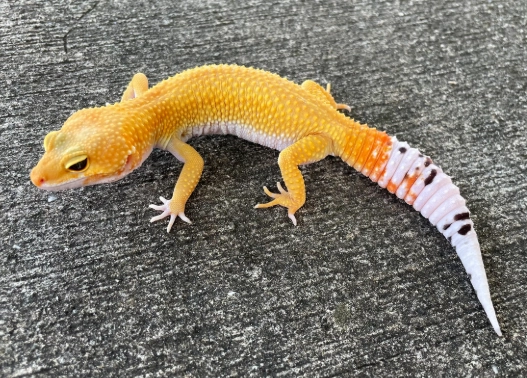
Answering Your Big Questions (FAQ)
How long do adult leopard geckos live?
With proper care, 15-20 years is common. There are verified records of some reaching over 25. Getting an adult leopard gecko is a long-term commitment, longer than many dogs.
Can I keep two adult leopard geckos together?
I strongly advise against it, especially for beginners. They are solitary in the wild. Cohabitation often leads to stress, competition for food and heat, and injury. The smaller one will almost always suffer. The only possible exception is a brief, carefully supervised breeding introduction of a male and female, but even that carries risk. For pet purposes, house them separately.
Why is my adult leopard gecko not eating?
First, check the season. It's normal for appetite to drop in the cooler winter months (a pseudo-brumation). If it's not winter, run down this checklist: Is the warm hide hot enough (88-92°F)? Are you offering a variety of feeders? Is the gecko about to shed (they often go off food)? Has anything changed in its environment (new smells, loud noises)? If the fast lasts more than 10-14 days or is accompanied by weight loss, see a vet.
How do I know if my adult leopard gecko is male or female?
Males have a distinct V-shaped row of pre-anal pores above the vent and prominent hemipenal bulges at the base of the tail. Females lack the bulges and have much fainter pores. This is usually clear by the time they reach adulthood.
What does a healthy poop look like?
Weird but important. It should have three parts: a dark, solid fecal portion (the waste), a white or off-white urate (the concentrated urine), and some liquid. Runny, all-white, or bloody stool is a sign of trouble.
The Senior Gecko: Special Considerations
As your adult leopard gecko passes the 8-10 year mark, its needs may change. They might become less active, sleep more, and eat less. Their joints can get a bit stiff. You can make small adjustments:
- Ensure the warm hide is consistently at the lower end of the range (88°F) – easier to digest.
- Offer softer feeders like hornworms or freshly shed mealworms/superworms.
- Make sure hides and climbing areas are easily accessible, with no steep drops.
- Monitor weight closely. Slight, gradual weight loss can be normal, but rapid loss is a red flag.
Caring for an adult leopard gecko through its golden years is deeply rewarding. You've provided a lifetime of good care.
At the end of the day, it's about observation. Your gecko will tell you what it needs if you learn its language. A plump tail, clear eyes, curious evening explorations, and a good appetite – these are the signs of a happy, healthy adult leopard gecko. It's not about having the most expensive tank decor; it's about nailing the fundamentals: the right space, the right heat, the right food, and a watchful eye. Do that, and you'll have a fascinating, low-maintenance companion for a very, very long time.
Got more questions? Drop them in the comments below. I'm not a vet, but I've been through a lot with these spotted friends and I'm happy to share what's worked (and what's definitely not worked) in my own reptile room.
Reader Comments