Explore the Guide
- What Exactly *Is* a Blue-tailed Salamander?
- How to Spot One: A Practical Identification Guide
- Blue-tailed Salamander vs. The Look-Alikes
- Where Do These Blue-tailed Guys Live?
- A Day in the Life: Behavior and What They Eat
- The Not-So-Great News: Conservation and Threats
- How to Be a Salamander-Friendly Human
- Your Blue-tailed Salamander Questions, Answered
- Wrapping It Up: Why Bother?
Let's be honest, most people wouldn't notice a salamander if it crawled over their boot. They're not exactly flashy like birds or cuddly like mammals. But once you start looking, especially in the damp corners of the eastern US forests, you might stumble upon one of the coolest little amphibians out there. I'm talking about the Blue-tailed salamander. The name itself is a bit of a trick, which we'll get into, but it's this subtle, secretive creature that tells you a lot about the health of the woods around you.
I remember the first time I really saw one. Not just a blurry shape under a log, but actually took a moment to look. It was after a spring rain in a Maryland state park, and flipping over a rotting piece of bark revealed this sleek, dark creature with a tail that had this unmistakable steely-blue sheen. It didn't move at first, just watched me with those tiny, dark eyes. That moment of connection, silly as it sounds, hooked me. It wasn't a colorful frog or a big snake; it was something quieter, more mysterious. And that's the thing about the Blue-tailed salamander – it's an expert at staying hidden, which makes finding one all the more rewarding.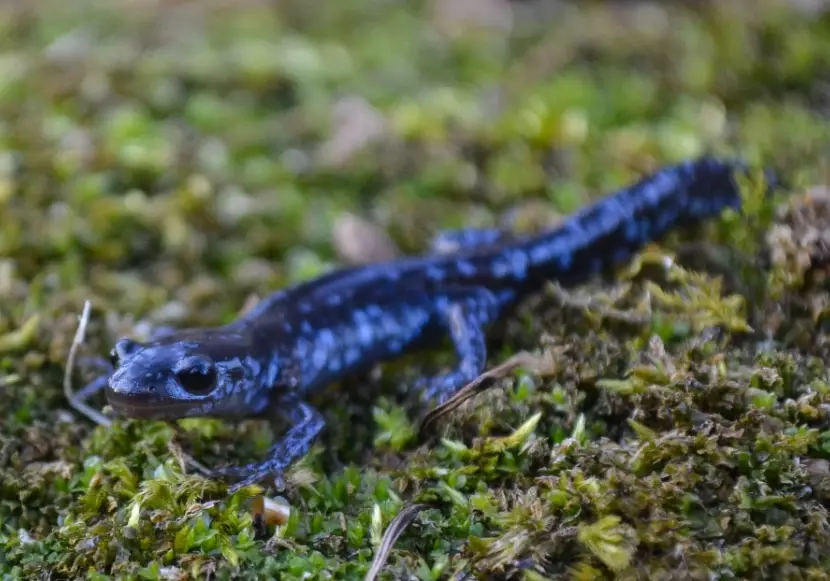
What Exactly *Is* a Blue-tailed Salamander?
Okay, so we're not talking about one single species with a neon-blue tail running around. Think of it more as a life stage or a common characteristic. Salamanders are amphibians, like frogs and toads, but they keep their tails and generally look more like lizards (though they're not even remotely related – lizards are reptiles with scales and claws).
The blue tail phenomenon is mostly a juvenile thing. Many species of salamanders are born in water as larvae with gills, looking like tiny, slender dragons. When they transform into their adult, land-living form (a process called metamorphosis), the young ones often have tails colored in vibrant shades of blue or blue-gray. This color typically fades as they become adults. Why blue? There's some debate. It might be a form of warning coloration to predators, signaling that the youngster might not taste great, or it could be a way for the young to recognize each other. Honestly, we're still figuring it out.
So if you see a small, slender salamander with a striking blue tail, you're likely looking at a teenager.
How to Spot One: A Practical Identification Guide
This is where most guides get too scientific too fast. Let's break it down into what you'll actually see.
First, size. A juvenile Blue-tailed salamander is small. We're talking 1.5 to 3 inches long from nose to tail tip. They're slender and built for squeezing under things. The body color is usually a yellowish, tan, or orange-brown, providing perfect camouflage against leaf litter and damp soil.
Then, the star of the show: the tail. It's not sky blue. Think more slate blue, steel blue, or grayish-blue. It's often brightest near the base and might have a slightly different texture than the body. The contrast between the body and the tail is usually pretty clear.
Look for small, dark spots or flecks scattered along the back and sides. Their bellies are typically a plain, lighter yellow or cream color. Their skin is smooth and moist to the touch – never dry or scaly. That's your number one rule to separate them from lizards.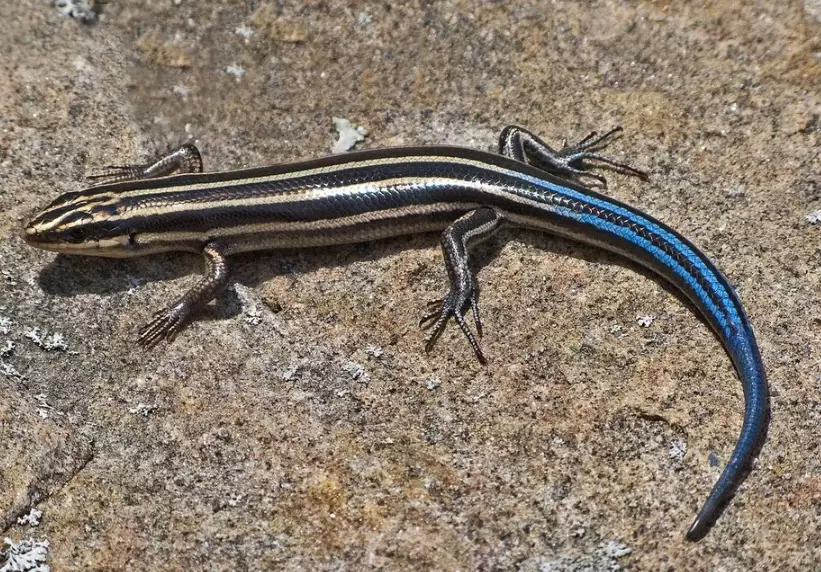
Blue-tailed Salamander vs. The Look-Alikes
This trips up everyone. Here’s a simple comparison so you don't get them mixed up.
| Feature | Blue-tailed Salamander (Juvenile) | Red-backed Salamander | Lizard (e.g., Skink) |
|---|---|---|---|
| Skin | Smooth, moist, slightly slimy | Smooth, moist | Dry, scaly, rough |
| Tail Color | Slate blue to gray-blue (on juveniles) | Gray or matches body (no distinct blue) | Brown, gray, or striped; never a uniform blue |
| Belly | Plain light yellow or cream | Salt-and-pepper speckled | Scales, often whitish |
| Legs & Toes | Short legs, 4 toes on front feet, 5 on back | Very short legs, same toe count | Longer legs, 5 toes on all feet, often with claws |
| Where You Find It | Under logs/rocks near water, seepages, caves | Under logs/rocks in dry-ish woods | Basking on rocks, logs, in sunny spots |
Where Do These Blue-tailed Guys Live?
Forget wide-open spaces. Think damp, dark, and hidden. If you're looking for a Blue-tailed salamander, you need to think like one. Moisture is non-negotiable. Their skin breathes, so if it dries out, they're in trouble.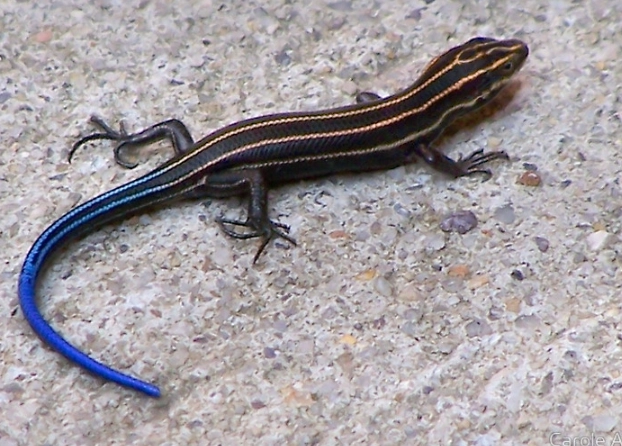
Prime real estate for them includes:
- The Classic: Under flat rocks, rotting logs, or pieces of bark on the forest floor. Always flip carefully and put everything back exactly as you found it.
- The Seepage Zone: Hillsides or slopes where water slowly trickles out of the ground. This constant moisture is a paradise for them.
- Near Streams & Springs: Not in the fast water, but in the damp soil, leaf piles, and under stones along the banks.
- The Cave Connection: For the true Eurycea lucifuga (Cave Salamander), the entrance zones of caves, rocky overhangs, and abandoned mine tunnels are home. They don't go deep into total darkness but love the twilight zone.
Geographically, you're looking at the Appalachian region and the surrounding areas. States like Tennessee, Kentucky, Virginia, West Virginia, Indiana, Ohio, and parts of Alabama and Georgia are hotspots. The U.S. Geological Survey has range maps that show how these species are distributed, and it's fascinating to see how a mountain range can define where a salamander lives.
No water nearby? You probably won't find a salamander.
A Day in the Life: Behavior and What They Eat
They are the ultimate ambush predators of the micro-world. A Blue-tailed salamander isn't going to chase down its dinner. It waits. It hides in its damp nook or under its leaf, and when a tiny, unsuspecting creature wanders by – snap! That lightning-fast tongue does the job.
Their menu is all about small invertebrates. We're talking:
- Springtails (those tiny hexapods that jump in leaf litter)
- Mites
- Small spiders
- Ants
- Beetle larvae
- Any other bug small enough to fit in their mouth
They're mostly nocturnal, which is another reason people miss them. During the day, they're tucked away conserving moisture. On cool, very wet nights, or after a heavy rain, they might venture out more openly. Their life cycle is pretty straightforward for most species: adults lay eggs in hidden, wet places (like underground near seeps or in cave streams), the eggs hatch into aquatic larvae with gills, those larvae grow and eventually metamorphose into the juvenile land form with the famous blue tail, and finally, they become adults, losing the bright tail color.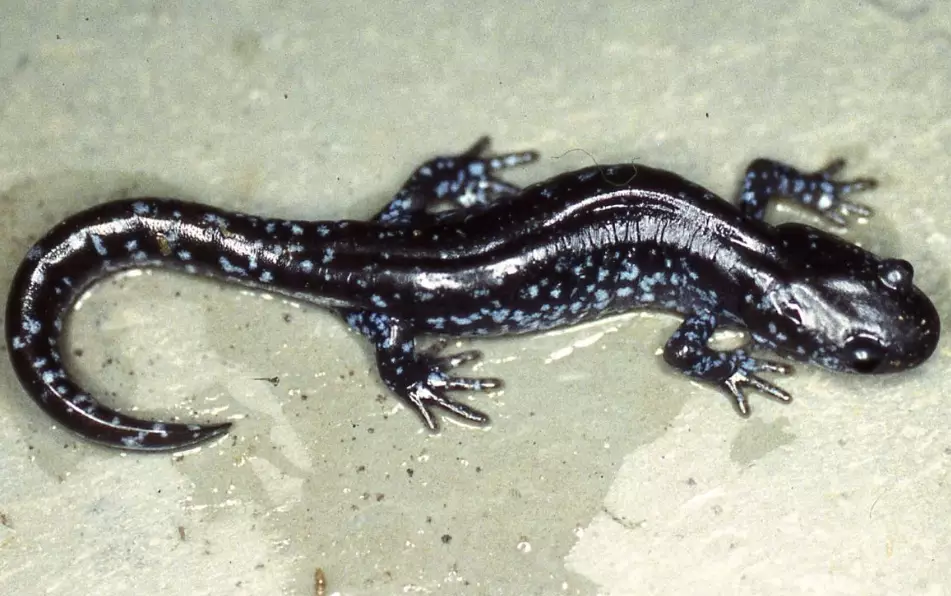
The Not-So-Great News: Conservation and Threats
Here's the part that isn't as fun. Salamanders, including our blue-tailed friends, are facing a bunch of problems. They're like the canaries in the coal mine for forest health. If they start disappearing, it's a bad sign.
What's hurting them?
- Habitat Loss & Fragmentation: This is the big one. When we build roads, clear forests, or develop land, we destroy the moist, connected habitats they need. A salamander can't cross a hot, dry parking lot to find a new log to live under.
- Pollution: Their skin absorbs everything. Pesticides, herbicides, road salt, and chemical runoff from lawns can poison them directly or kill the tiny insects they eat.
- Climate Change: Altered rainfall patterns can dry out the seepages and moist microhabitats they depend on. Warmer temperatures can also stress them.
- Disease: Like many amphibians, they are susceptible to fungal diseases like chytridiomycosis and ranavirus, which can wipe out populations.
Most specific Blue-tailed salamander species aren't currently listed as federally endangered, but several have declining populations and are considered species of special concern in many states. The IUCN Red List is the global authority for conservation status, and checking specific species there gives you the real picture. It's often more dire than people assume.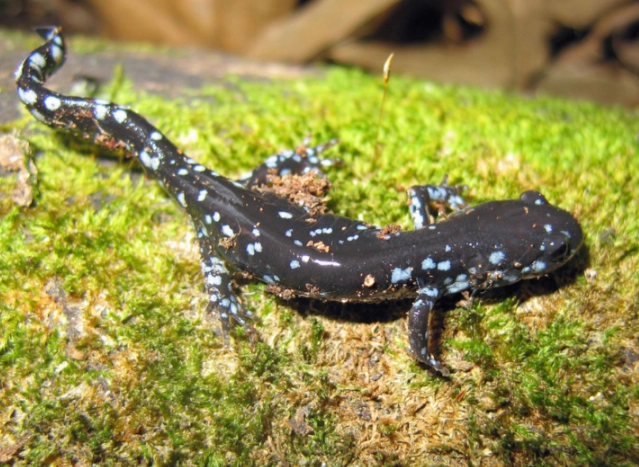
How to Be a Salamander-Friendly Human
You don't have to be a scientist to help. Simple things make a difference.
- Leave Logs and Rocks: If you have a wooded property, leave fallen logs and rocks where they are. They're salamander apartment buildings.
- Watch Your Chemicals: Limit pesticide and herbicide use in your yard, especially near wooded or damp areas.
- Protect Wet Areas: If you have a seep, spring, or small stream on your land, protect the vegetation around it. That buffer zone is critical.
- Be a Citizen Scientist: Report your sightings to platforms like iNaturalist. Your casual photo can contribute valuable data about their distribution.
- Support Land Trusts: Organizations that purchase and protect natural habitats are creating permanent safe havens for them and everything else in the ecosystem.
It's about respecting the damp, dark corners of the world.
Your Blue-tailed Salamander Questions, Answered
Wrapping It Up: Why Bother?
You might be thinking, "It's just a small, damp bug-eater. Who cares?" I get it. But here's my take after years of poking around in the woods: caring about things like the Blue-tailed salamander is a way of paying attention. It's about noticing the complexity of a rotting log. It's an indicator that the quiet, wet places are still functioning.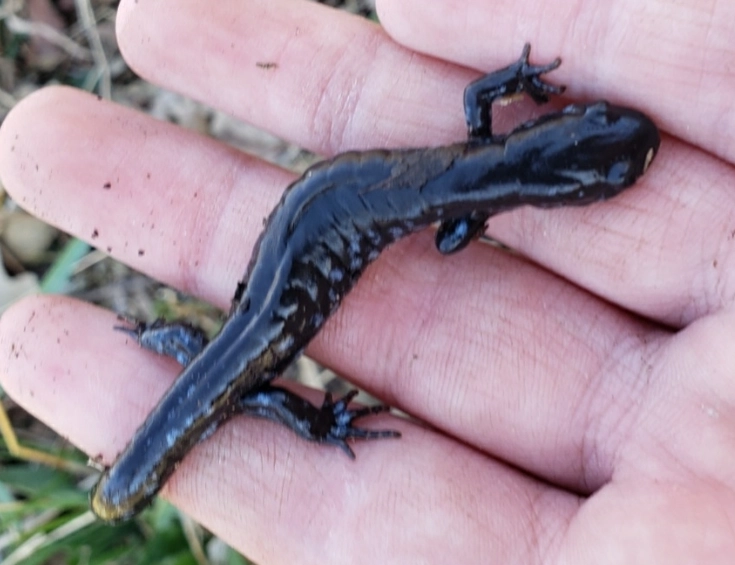
Finding one is a small thrill, a secret shared with the forest. It reminds you that there's an entire world of life happening underfoot, one that's beautiful in its subtlety. That steely-blue flash on a juvenile's tail is a badge of a healthy ecosystem. Protecting them means protecting the clean water, rich soil, and complex forests that we all ultimately depend on, even if we live in cities.
So next time you're on a hike after a rain, take a moment. Carefully flip a log at the edge of a trickling seep. You might just meet one of these enigmatic little amphibians. Just remember to put its roof back when you're done.
Reader Comments