Quick Navigation
- What Exactly Are Leaf Tailed Geckos?
- The Incredible Adaptations: More Than Just a Pretty (Camouflaged) Face
- Popular Species in the Hobby: Which Leaf Tailed Gecko is Right for You?
- The Non-Negotiables: Setting Up the Perfect Enclosure
- Feeding Your Leaf Tailed Gecko: It's Not Just Crickets
- Health, Behavior, and What to Watch For
- Breeding Leaf Tailed Geckos: A Commitment
- Frequently Asked Questions (The Real Ones People Ask)
- Final Thoughts: Is a Leaf Tailed Gecko for You?
Let's be honest, the first time you see a picture of a leaf tailed gecko, you probably spend a good minute just trying to find it. Is it a leaf? A piece of bark? Nope. It's a living, breathing gecko that has perfected the art of being invisible. These aren't your average, run-of-the-mill pet store geckos. Hailing from the mystical island of Madagascar, leaf tailed geckos (scientifically grouped under the genus Uroplatus) are a whole different ball game. They're the illusionists of the reptile world, and caring for them is a unique challenge that's incredibly rewarding if you get it right.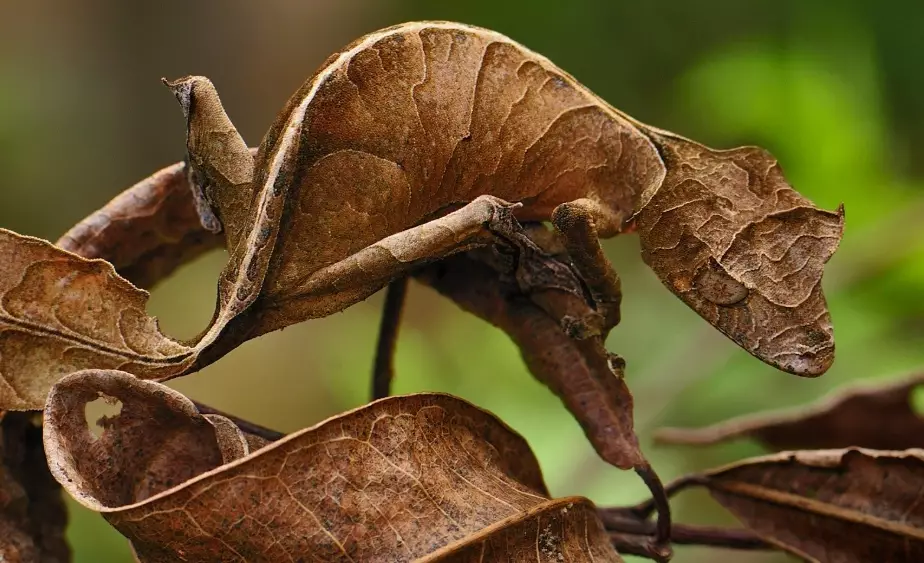
I remember the first time I saw one in person at a reputable breeder's facility. I was staring right at the cork bark in the enclosure and still couldn't spot it. The breeder had to point it out, and even then, my brain struggled to reconcile the shape of a gecko with the texture and form of the wood. It was a magic trick happening right in front of me. That experience solidified my fascination. But here's the thing everyone needs to know upfront: these are not beginner reptiles. They have very specific needs that, if ignored, lead to a very short, unhappy life for the gecko. This guide isn't meant to scare you off, but to honestly prepare you for what keeping a leaf tailed gecko entails. We'll cut through the myths and Instagram filters and talk about the real, day-to-day reality of sharing your home with a piece of living Madagascar forest.
What Exactly Are Leaf Tailed Geckos?
Okay, let's start with the basics. The term "leaf tailed gecko" refers to about 20 different species (scientists are still debating the exact number) that all belong to the genus Uroplatus. The name itself is a dead giveaway: "Uro" means tail, "platus" means flat. They're the flat-tailed geckos. And that tail is their signature feature. It's not just for show; it's a central part of their camouflage strategy. When they press their body against a tree branch and tuck their legs in, the flattened tail breaks up their outline, making them look exactly like a dead leaf or a continuation of the bark.
They're endemic to Madagascar and a couple of tiny surrounding islands. That means you won't find them anywhere else on Earth in the wild. This isolation is what allowed them to evolve such bizarre and specialized traits. They're nocturnal, spending their days glued to vertical tree trunks or branches, and becoming active hunters at night. Their eyes are large, lidless, and have a vertical pupil that can open incredibly wide to gather every speck of available moonlight.
One of the most common misconceptions is that they are related to other popular geckos like tokays or day geckos. Not really. They're in their own unique evolutionary branch. This uniqueness extends to their care.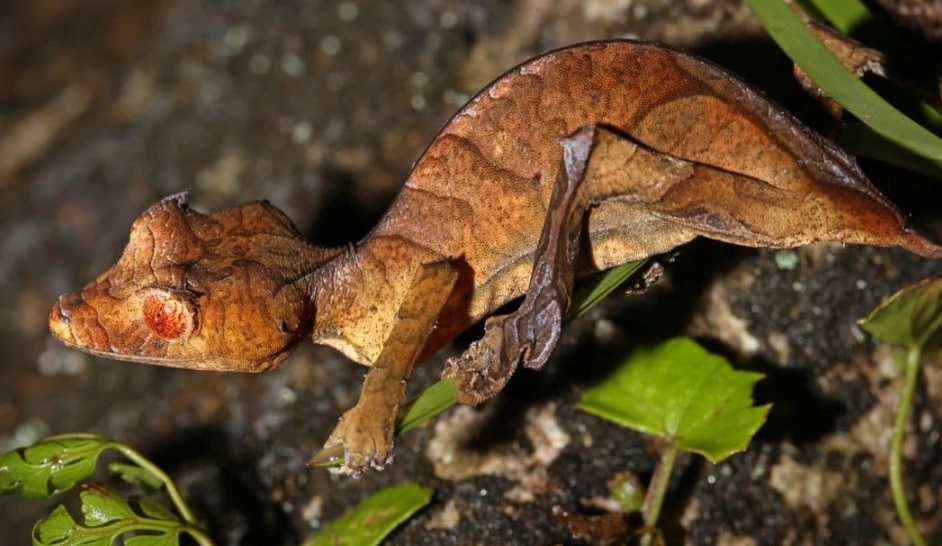
The Incredible Adaptations: More Than Just a Pretty (Camouflaged) Face
Their camouflage is the headline act, but the supporting features are just as fascinating. Let's break down the toolkit that makes a leaf tailed gecko a survival master.
The Famous Fringe
Look closely at the sides of their body, legs, and especially around their head and jawline. You'll see a delicate fringe of skin. This isn't a fashion statement. When the gecko flattens itself against a surface, this fringe eliminates any shadow its body might cast. No shadow means no visual cue for a predator (or prey) to spot. It's like built-in anti-aliasing for their body.
Prehensile Tail and Grippy Feet
That flat tail is also partially prehensile. They don't use it like a monkey, but they can grip and curl it around branches for extra stability. Combine that with their specialized toe pads. Unlike the sticky, hair-covered pads of a crested gecko, Uroplatus toe pads have rows of tiny scales (lamellae) and claws that allow them to grip onto rough surfaces like bark with an almost alarming strength. Trying to gently pry one off a branch when you need to is an exercise in patience—you can easily injure them if you pull.
Color Change and "Eye Lash"
While not as dramatic as a chameleon, leaf tailed geckos can shift their color to better match their background. It's a slower, more subtle process, usually between shades of brown, gray, green, and tan. Some species, like the Satanic Leaf Tailed Gecko (Uroplatus phantasticus), have little projections above their eyes that look like eyelashes or notches in a leaf, completing the illusion of being a decaying piece of foliage.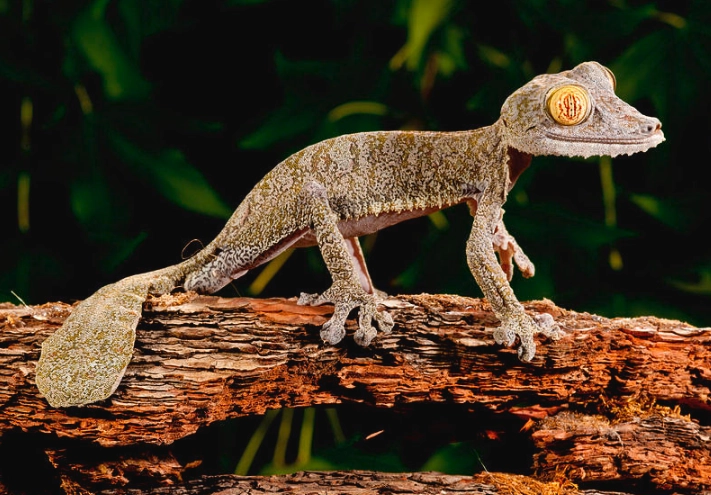
Popular Species in the Hobby: Which Leaf Tailed Gecko is Right for You?
Not all leaf tailed geckos are the same. Care requirements, size, and availability vary. Here’s a look at the ones you're most likely to encounter from captive breeders. Please, I can't stress this enough, always buy captive-bred. Wild-caught imports are often loaded with parasites, incredibly stressed, and their collection harms wild populations. Captive-bred geckos are healthier, more adaptable, and support ethical herpetoculture.
| Common Name | Scientific Name | Adult Size | Key Characteristics & Care Notes | Beginner Friendly? |
|---|---|---|---|---|
| Giant Leaf Tailed Gecko | Uroplatus fimbriatus | 10-12 inches | The largest species. Impressive size, very pronounced fringe. Needs a very tall, large enclosure (at least 18x18x36"). More sensitive to incorrect humidity. | No |
| Mossy Leaf Tailed Gecko | Uroplatus sikorae | 6-8 inches | Probably the most common in captivity. Fantastic bark-like camouflage with lichen-like patterns. A bit hardier than some others, but still intermediate. | Intermediate |
| Satanic Leaf Tailed Gecko | Uroplatus phantasticus | 3-4 inches | The "poster child" for the genus. Tiny, with a leaf-shaped tail and eye projections. Very delicate. Requires pristine, stable conditions and tiny food items. | No |
| Henkel's Leaf Tailed Gecko | Uroplatus henkeli | 8-10 inches | Broad head, often with a smiling expression. Slightly more tolerant of handling than others, but that's not saying much. A good choice for someone with experience moving up. | Intermediate |
| Lineated Leaf Tailed Gecko | Uroplatus lineatus | 4-5 inches | Slender with striking longitudinal lines. Arboreal and very shy. Requires a densely planted enclosure with lots of vertical bamboo or thin branches. | No |
For most people dipping their toes into the world of Uroplatus, the Mossy Leaf Tailed Gecko (U. sikorae) is often the recommended starting point. Their care requirements are a bit more forgiving, and they have a slightly more robust constitution. But remember, "beginner" in the leaf-tailed gecko world still means you should have experience with other, more forgiving tropical reptiles first.
The Non-Negotiables: Setting Up the Perfect Enclosure
This is where most failures happen. You can't just put a leaf tailed gecko in a fish tank with a heat lamp and some fake plants. Their enclosure, or vivarium, needs to be a functional ecosystem. A bioactive setup isn't just a trendy option here; it's highly recommended and makes long-term maintenance easier.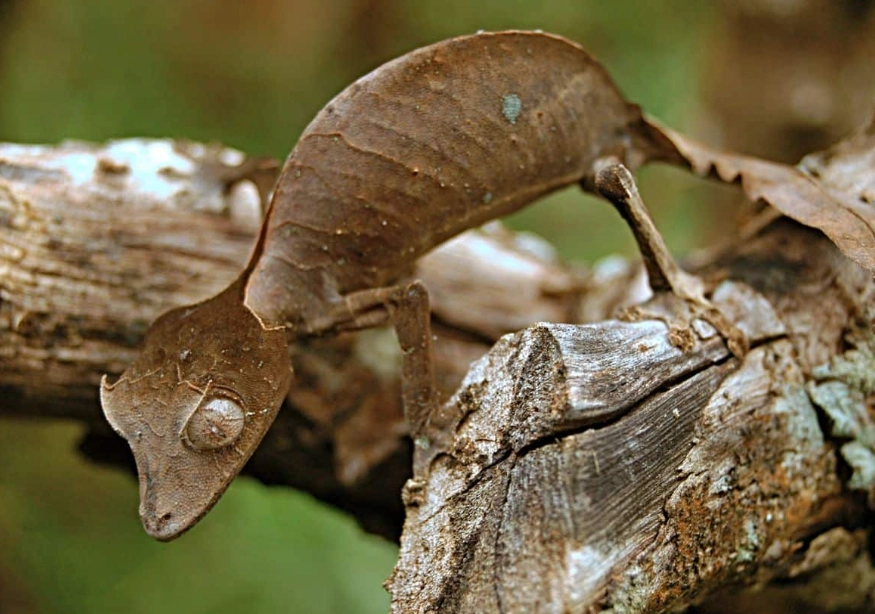
Enclosure Type and Size
Go tall. These are vertical climbers. A front-opening terrarium is ideal as it disturbs them less than reaching in from above. For a pair of smaller species like sikorae, an 18"x18"x24" is the absolute minimum, but bigger is always better. Giants (fimbriatus) need something like an 18"x18"x36" or larger. Screen tops are okay, but you'll need to cover a large portion with glass or plastic to retain humidity.
The Holy Trinity: Temperature, Humidity, and Lighting
The Climate Checklist:
- Daytime Temperature: A gradient from 72-75°F (22-24°C) at the bottom to maybe 78-80°F (26-27°C) in a small basking spot near the top. They do not need desert heat. I've seen people cook them with overly hot lamps.
- Nighttime Temperature: A drop to 65-70°F (18-21°C) is perfect and natural.
- Humidity: This is critical. 70-80% during the day, spiking to 90-100% at night. You achieve this with a deep, moist substrate, live plants, and misting heavily once or twice a day with a pressure sprayer. A automatic misting system is a great investment.
- Lighting: No bright, white basking lights. Use low-output plant lights or LED bars for the plants. They need a day/night cycle, but the light should be gentle. UVB is a topic of debate. Low-level, forest-gradient UVB (like a Zoo Med T5 5.0 or Arcadia ShadeDweller) is likely beneficial for calcium metabolism and is considered best practice by advanced keepers, but it must not overheat the enclosure.
You'll need digital hygrometers and thermometers at both the top and bottom of the tank. The cheap analog dials are notoriously inaccurate. Don't guess.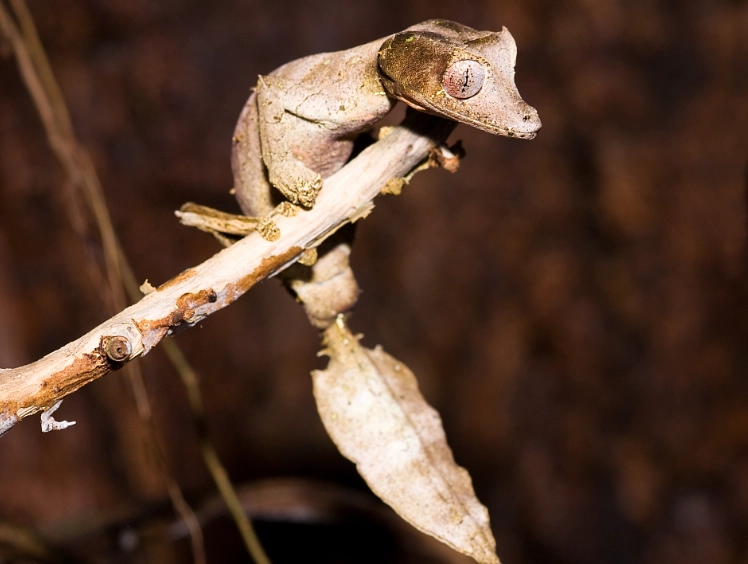
Substrate and Hardscape
A deep, bioactive substrate is key. A mix of organic topsoil, coconut coir, sphagnum moss, and leaf litter works well. This holds moisture, supports plant and clean-up crew life (springtails and isopods), and helps maintain humidity. The hardscape—the bones of the enclosure—is mostly vertical cork bark rounds and flats. Create lots of hiding places and vertical pathways. Siliconing cork flats to the back and sides gives them more surface area to hide on.
Plants, Plants, Plants
Live plants are not decorative; they are functional air purifiers and humidity regulators. Pothos, Philodendron, Snake Plants (Sansevieria), Ficus pumila, and various bromeliads (which can hold water in their cups) are all excellent, hardy choices. A densely planted tank makes a leaf tailed gecko feel secure.
Feeding Your Leaf Tailed Gecko: It's Not Just Crickets
In the wild, their diet is diverse. We need to replicate that variety in captivity to ensure proper nutrition. The base of their diet will be gut-loaded insects.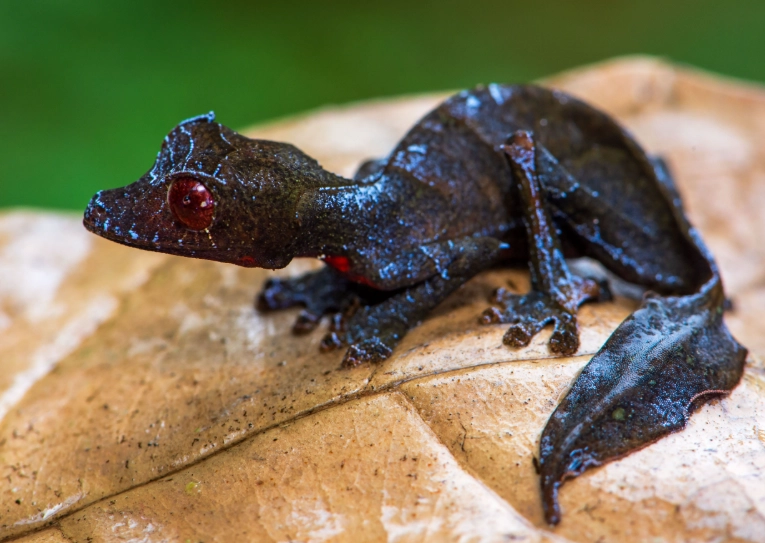
Staple Feeders: Crickets, dubia roaches, and discoid roaches are great. The size of the prey is crucial—it should never be wider than the space between the gecko's eyes.
Treat Feeders: Waxworms, silkworms, hornworms, and the occasional small moth or fly add variety and fat. Don't overdo the fatty treats.
The Crucial Supplements: Every insect must be dusted. This is non-negotiable. Use a high-quality calcium supplement (without D3 if you are providing UVB, with D3 if you are not) on almost every feeding. A good multivitamin should be used once or twice a week.
Feeding happens at night. I just turn off the lights, drop the appropriately sized, supplement-dusted insects into the enclosure, and let the geckos hunt. It's fascinating to watch. Some individuals are shy and will only eat if you leave them alone. Remove any uneaten crickets by morning, as they can bother or even bite a sleeping gecko.
How often? Juveniles daily, adults every other day or 3-4 times a week. Observe their body condition. A healthy leaf tailed gecko should have a slightly plump tail base and no visible hip bones.
Health, Behavior, and What to Watch For
A healthy leaf tailed gecko is alert (at night), has clear, bright eyes, and a firm body. They should be clinging securely to branches or bark during the day.
- Stuck Shed: Especially on toes and the tail tip. This can constrict blood flow and lead to loss of digits. Chronic stuck shed usually means humidity is too low.
- Lethargy During Active Hours: If they're on the ground at night and not moving, something is very wrong.
- Weight Loss: Visible spine, sunken eyes, a skinny tail.
- Mouth Rot (Stomatitis): Discoloration, pus, or swelling around the mouth.
- Respiratory Infection: Bubbly mucus around nose or mouth, wheezing, open-mouth breathing.
Find a veterinarian who specializes in reptiles before you have an emergency. Not all vets are experienced with the subtleties of Uroplatus care.
As for behavior, don't expect a cuddly pet. Handling should be extremely minimal and only for essential maintenance like tank deep-cleaning or health checks. When you must handle them, be slow, confident, and let them walk onto your hand. Never grab or pull. Their skin is delicate, and their tails, while not as prone to dropping as some geckos, can be autotomized (dropped) under extreme stress.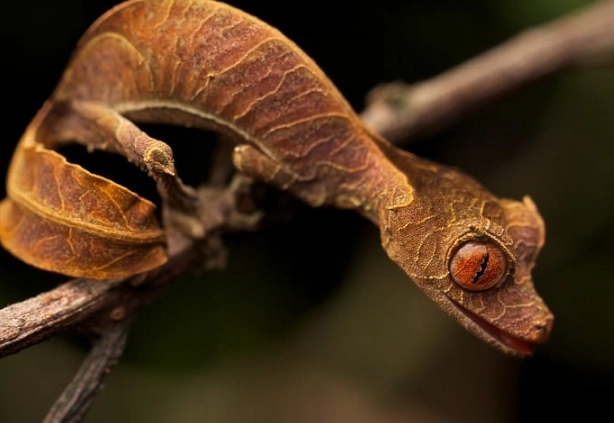
Breeding Leaf Tailed Geckos: A Commitment
Breeding these geckos is a serious undertaking and should only be attempted by those who have mastered their general care. It often requires a seasonal cooling period (a "brumation" of sorts, though not a true hibernation) to simulate Madagascar's cooler, drier winter and trigger breeding cycles. Females lay only 2-4 eggs per clutch, often gluing them to leaves or bark. The eggs are incredibly sensitive to moisture levels—too wet and they rot, too dry and they desiccate. Incubation is long, often 90-120 days at room temperature (68-72°F). Hatchlings are tiny and require even more stable conditions and minute food like pinhead crickets or fruit flies.
Conservation Status: Why Captive Breeding Matters
This is the most important part of the conversation. Almost all species of leaf tailed geckos are threatened in the wild. The primary threat is habitat loss from deforestation for agriculture and logging. The pet trade, particularly for wild-caught specimens, has historically been a pressure too.
According to the IUCN Red List of Threatened Species, many Uroplatus species are listed as Vulnerable or Endangered. For example, the Satanic Leaf Tailed Gecko (U. phantasticus) is listed as Vulnerable due to its small, fragmented range.
This is why supporting captive breeding is an ethical imperative. By purchasing from dedicated breeders who are working with established captive bloodlines, you are zero pressure on wild populations. You're also getting a healthier animal. Organizations like the California Academy of Sciences are involved in research and conservation efforts in Madagascar, helping to understand and protect these unique creatures and their habitat. As keepers, our responsibility is to provide the best possible care for our animals and to educate others, reducing the demand for wild-caught individuals.
Frequently Asked Questions (The Real Ones People Ask)
Final Thoughts: Is a Leaf Tailed Gecko for You?
Look, I love these animals. They are endlessly fascinating. But I've also seen too many end up in the hands of well-meaning but unprepared people, leading to a slow decline. They are a pet for a specific type of person: the patient observer, the detail-oriented hobbyist who gets joy from perfecting an environment and then quietly watching it thrive.
If you're willing to invest in the right equipment (which isn't cheap), commit to a daily routine of misting and monitoring, and accept that you have a beautiful living piece of art rather than an interactive pet, then the world of leaf tailed geckos is incredibly rewarding. You'll learn more about microclimates, plant care, and animal behavior than you ever thought possible.
Start by researching reputable breeders. Join dedicated forums and Facebook groups (but vet the advice you read). Get your enclosure set up and running perfectly for a month before you even think about buying the gecko. Dial in the temperature and humidity cycles. Grow the plants in. If you can maintain that stable, pristine slice of rainforest, then you might just be ready for the incredible responsibility and joy of caring for a leaf tailed gecko.
They're not for everyone, and that's okay. For those they are for, there's nothing else quite like them.
Reader Comments